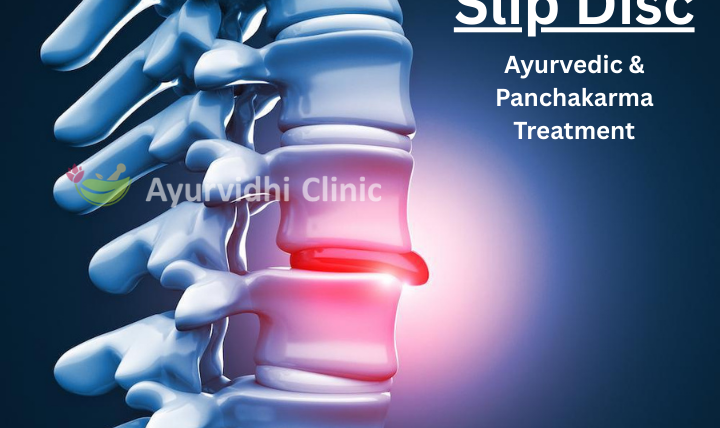

Ayurvidhi Clinic image showing a detailed spine with a highlighted slipped disc area, representing Ayurvedic and Panchakarma treatment for slip disc pain relief without surgery.

Slip Disc Relief Naturally: Ayurveda & Panchakarma Care

Slip Disc: Ayurvedic & Panchakarma Treatment for Natural and Long-Term Non- surgical Relief 

Slip Disc, also known as disc prolapse or herniated disc, is a common spinal problem that causes severe back pain and nerve compression. It is increasingly seen due to long sitting hours, poor posture, lack of exercise, stress, and aging.

Modern treatment often relies on painkillers, steroids, or surgery. These may give short-term relief but do not always correct the root cause. Ayurveda offers a natural, safe, and effective approach by balancing dosha, strengthening the spine, and reducing nerve inflammation.

Suffering from back pain or radiating leg pain? Consult our Ayurvedic specialist today. @https://ayurvidhiclinic.com/contact-us/


What is Slip Disc According to Ayurveda?

In Ayurveda, Slip Disc is associated with Vaata Vyadhi.
When Vaata Dosha becomes aggravated, it leads to dryness, degeneration, and weakness of spinal discs (Asthi & Majja Dhatu).

Common Ayurvedic causes include:

  • Long sitting or wrong posture

  • Excessive physical strain

  • Aging and degeneration

  • Lack of lubrication in joints

  • Weak digestion (Agni)

  • Stress and anxiety

Get your dosha assessment done to know the exact cause of your pain. @ayurvidhi_clinic


Common Symptoms of Slip Disc

  • Severe lower back or neck pain

  • Pain radiating to legs or arms (sciatica)

  • Numbness or tingling sensation

  • Muscle weakness

  • Difficulty walking or bending

  • Stiffness and restricted movement

Early treatment prevents nerve damage and surgery.

Do not ignore radiating pain—early Ayurvedic care can help.


Ayurvedic Treatment for Slip Disc

Ayurveda focuses on Vaata pacification, tissue nourishment, and muscles – nerve strengthening.

🔹 Herbal Medicines

Commonly used herbs:

  • Guggul Kalpa

  • Rasna, Ashwagandha, Bala medicine

Benefits:
✔ Reduces inflammation
✔ Nourishes discs
✔ Strengthens nerves
✔ Improves flexibility

 Get customized Ayurvedic medicines prepared under Vaidya supervision.


Role of Panchakarma in Slip Disc Treatment: 

Panchakarma plays a crucial role in managing disc problems.

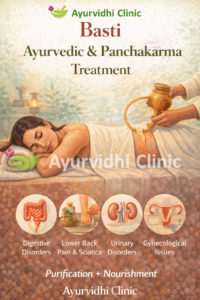
Basti (Medicated Enema Therapy)

Best therapy for Vata disorders; strengthens spine and nerves.

Abhyanga (Oil Massage)

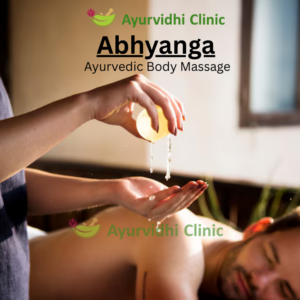
Ayurvidhi Clinic image showing Abhyanga Ayurvedic body massage with warm herbal oil poured on the body, promoting relaxation, detoxification, and holistic wellness.
The image shows a therapist gently pouring warm herbal oil onto the body of a person during an Abhyanga Ayurvedic massage session. The client is lying comfortably, symbolizing relaxation and healing. The soft lighting and natural tones reflect calmness and rejuvenation. The text “Abhyanga – Ayurvedic Body Massage” with the Ayurvidhi Clinic logo highlights the therapeutic benefits of traditional oil massage for detoxification, stress relief, and holistic wellness.

Relieves muscle stiffness and improves circulation.

Swedana (Herbal Steam Therapy)

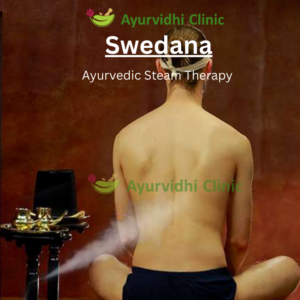
Ayurvidhi Clinic image showing Swedana Ayurvedic steam therapy, with herbal steam applied to the back for detoxification, pain relief, and dosha balance.
Swedana Ayurvedic Steam Therapy helps eliminate toxins, relieve stiffness, and improve circulation. At Ayurvidhi Clinic, this traditional therapy is used to support joint health, muscle relaxation, detoxification, and enhanced results of Panchakarma treatments.

Reduces pain and improves mobility.

Kati Basti 

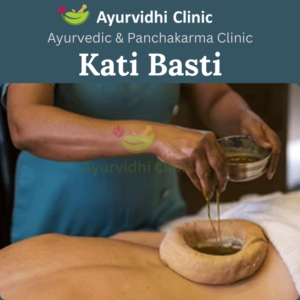
Ayurvidhi Clinic image showing Kati Basti Ayurvedic therapy, where warm medicated oil is retained on the lower back to relieve pain and strengthen the spine.
Kati Basti is a specialized Ayurvedic therapy for chronic lower back pain, slip disc, and spinal stiffness. At Ayurvidhi Clinic, warm medicated oils are retained over the lower back to nourish tissues, reduce inflammation, and provide long-lasting pain relief naturally.

Localized oil pooling therapy for lumbar and cervical disc problems.

Pizhichil

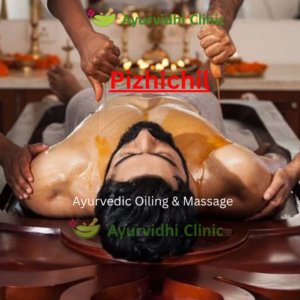
Ayurvidhi Clinic image showing Pizhichil Ayurvedic therapy with warm medicated oil poured over the body, promoting detoxification, pain relief, and nervous system rejuvenation
Pizhichil is a classical Ayurvedic therapy combining warm herbal oil pouring and synchronized massage to nourish muscles, calm the nervous system, and relieve chronic pain. At Ayurvidhi Clinic, Pizhichil therapy supports joint health, stress reduction, and overall rejuvenation.

Lubricates joints and supports spinal regeneration.

 Ask about our Slip Disc Panchakarma Rehabilitation Program. @https://ayurvidhiclinic.com/panchakarma/


🥗 Diet & Lifestyle for Slip Disc Recovery

Recommended:

  • Warm, nourishing food

  • Ghee, milk (if suitable)

  • Green vegetables

  • Turmeric and ginger

  • Gentle yoga and physiotherapy

Avoid:

  • Cold and dry foods

  • Excessive travel

  • Heavy lifting

  • Long sitting without breaks

Get a personalized Ayurvedic diet and lifestyle plan for spine health. @https://ayurvidhiclinic.com/services/


Why Choose Ayurveda for Slip Disc?

✔ Natural & safe
✔ Avoids surgery in many cases
✔ Strengthens spine naturally
✔ Long-term relief
✔ Improves quality of life
✔ Suitable for chronic conditions

Ayurveda treats the root cause—not just pain. For best ayurvedic & panchakarma treatment for Slip Disc contact @https://ayurvidhiclinic.com/contact-us/


🏥 Our Clinic’s Special Approach to Slip Disc Care

At our Ayurvidhi  Ayurvedic clinic, we offer:

  • Detailed spinal assessment

  • Personalized Panchakarma therapies

  • Authentic Ayurvedic medicines

  • Rehabilitation and prevention guidance

  • Post-treatment care and follow-up

We are the best ayurvedic clinic in Lohegaon- Dhanori for slip Disc treatment

 Book your Ayurvedic consultation today and take the first step toward pain-free movement.@https://ayurvidhiclinic.com/contact-us/


Regain Mobility, Reduce Pain Naturally

Slip Disc does not always need surgery. With timely Ayurvedic treatment and Panchakarma, many patients experience lasting relief and improved mobility.

📞 Call now to schedule your appointment @https://ayurvidhiclinic.com/contact-us/
📍 Visit our clinic for holistic spine care @https://www.google.com/maps/place/Ayurvidhi+Clinic/data=!4m2!3m1!1s0x0:0xc5de21061f105a92?sa=X&ved=1t:2428&ictx=111


Read More
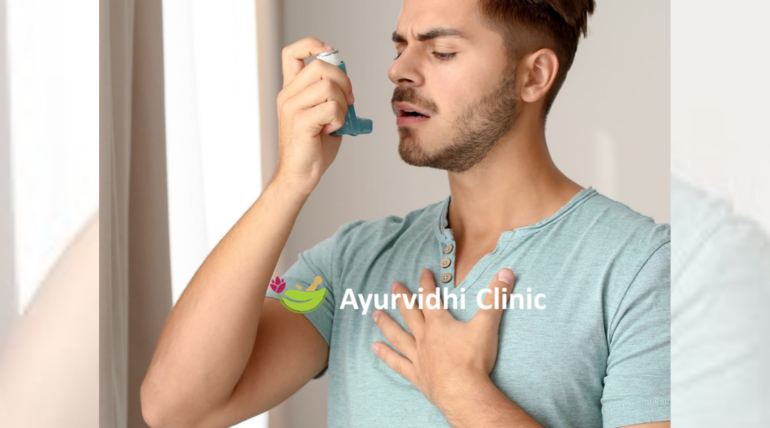
Ayurvidhi Clinic image showing a man using an inhaler due to asthma, promoting natural Ayurvedic and Panchakarma treatment for asthma and respiratory relief.

Breathe Free Naturally: Ayurvedic & Panchakarma Care for Asthma

Asthma is a chronic respiratory condition affecting people of all ages, characterized by repeated episodes of breathlessness, wheezing, chest tightness, and persistent coughing. In recent years, cases of asthma and other respiratory illnesses have been climbing, especially in urban areas, driven largely by worsening air pollution, seasonal changes, allergens, stress, and weakened immunity. Poor air quality places additional stress on the lungs: many Indian cities currently record unhealthy AQI levels, with parts of Maharashtra—including areas like Pimpri-Chinchwad—frequently reporting AQI values in the unhealthy to poor range, meaning the air contains elevated levels of fine particulates that can irritate airways and trigger asthma attacks. In northern India, cities often reach even higher very poor to hazardous AQI categories, creating serious risks for those with asthma, children, and the elderly. The Times of India+1

Modern medicine typically focuses on inhalers, bronchodilators, and steroids. These treatments are effective at relieving acute symptoms and preventing immediate airway constriction, but they often do not address long-term respiratory resilience or the underlying imbalances that predispose individuals to frequent flare-ups. In contrast, Ayurveda offers a holistic, natural, and long-term approach that aims to strengthen lung function, enhance immunity, and balance the body’s internal systems. By addressing digestive fire (Agni), reducing chronic inflammation, and balancing the dosha (especially Kapha and Vaata), Ayurvedic care seeks not only to ease symptoms but to improve overall respiratory health and resilience—especially valuable in times of poor air quality that repeatedly challenge the lungs.

Struggling with asthma or frequent breathing difficulty? Consult our Ayurvedic expert today for a personalized treatment plan https://ayurvidhiclinic.com/services/

🌬️ What is Asthma According to Ayurveda?

In Ayurveda, asthma is known as Shwaasa which further classified as Tamaka Shwaasa, Pratamaka Shwaasa as per dosha conjunction.
It mainly occurs due to an imbalance of Vaata and Kapha Dosha, leading to obstruction in the respiratory channels i.e. Praanavaha Srotas.

Common Ayurvedic causes include:

  • Accumulation of Kapha in the lungs

  • Weak digestive fire (Mandaagni)

  • Exposure to dust, smoke, cold air

  • Cold, heavy, oily foods

  • Recurrent cough and cold

  • Stress and lack of sleep

  • Hereditary Issues of Shwaasa in family
  • Beej Dushti while conceiveing a baby

Identify the root cause of your asthma through an Ayurvedic consultation.@https://ayurvidhiclinic.com/contact-us/


Common Symptoms of Asthma

  • Shortness of breath

  • Wheezing sound while breathing

  • Chest tightness

  • Frequent cough, especially at night or early morning

  • Difficulty breathing during exertion

  • Increased symptoms during cold or pollution

Early and timely treatment can prevent complications and dependence on inhalers.

 Do not ignore recurring breathing problems—get Ayurvedic help early.


Ayurvedic Treatment for Asthma

Ayurveda treats asthma by clearing the airways, reducing inflammation, and strengthening lung tissue.

🔹 Herbal Medicines

Commonly used Ayurvedic herbs include:

  • Vasa

  • Kantakari

  • Pippali

  • Tulsi

  • Yashtimadhu

These herbs:
✔ Reduce mucus
✔ Improve airflow
✔ Strengthen lungs
✔ Boost immunity

These herbs are just for information, kindly consult an Ayurvedic Doctor before consuming as medication. Avoid self medication!

Get customized herbal medicines prepared under Vaidya supervision @https://ayurvidhiclinic.com/pacifying-treatment/


Role of Panchakarma in Asthma Management

Panchakarma therapies help remove deep-rooted toxins and balance doshas.

Vamana (Therapeutic Emesis)

Best for chronic Kapha-related asthma. Helps clear mucus from lungs.

Virechana (Purgation Therapy)

Improves digestion and prevents toxin formation.

Nasya (Nasal Therapy)

Clears nasal passages and strengthens respiratory function.

Abhyanga & Swedana

Reduces stiffness, improves circulation, and supports lung function.

Dhoomapana:

Reduces congestion, clear block pathways due to cough, helps to restore respiratory health

Ask about our asthma-specific Panchakarma program.@https://ayurvidhiclinic.com/panchakarma/


Diet & Lifestyle Guidelines for Asthma

Recommended:
  • Warm, light, and freshly cooked food

  • Ginger, turmeric, black pepper

  • Herbal teas

  • Warm water

Avoid:
  • Cold drinks and ice cream

  • Dairy in excess

  • Fried and processed foods

  • Exposure to dust and smoke

 Get a personalized Ayurvedic diet plan for asthma care.@https://ayurvidhiclinic.com/pacifying-treatment/


Why Choose Ayurveda at Ayurvidhi Clinic for Asthma Treatment?

✔ Natural and safe
✔ No dependency on steroids
✔ Treats root cause
✔ Improves lung capacity
✔ Reduces frequency of attacks
✔ Enhances overall immunity

Ayurveda helps patients breathe better—naturally.


🏥 Our Clinic’s Approach to Asthma Care

At our Ayurvedic clinic, we provide:

  • Detailed dosha-based diagnosis

  • Individualized treatment plans

  • Safe Panchakarma therapies

  • Long-term respiratory strengthening

  • Preventive care for pollution exposure

Book your Ayurvedic asthma consultation today and take the first step towards better breathing @https://ayurvidhiclinic.com/contact-us/


Take Control of Your Asthma Naturally

Asthma can be managed effectively with the right Ayurvedic care, timely treatment, and lifestyle correction. Don’t wait until symptoms worsen.

📞 Call now to schedule your consultation @https://wa.me/message/MBTFCXKULPB2K1
📍 Visit our Ayurvidhi clinic for holistic asthma care treatment @https://maps.app.goo.gl/CSDkvnJUUzACTnrM6 

Read More
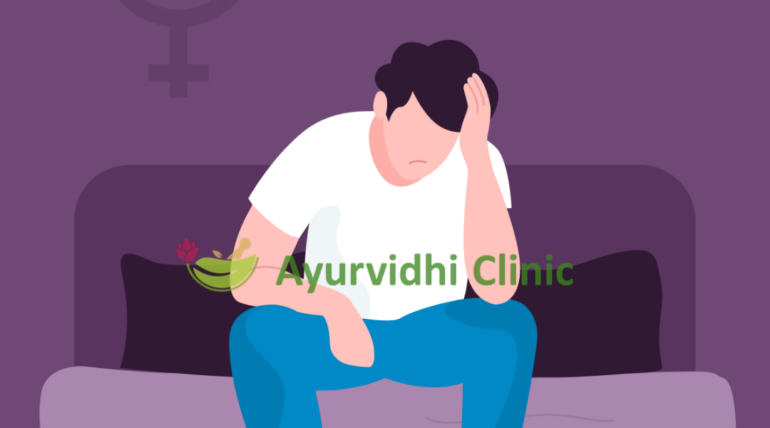
Ayurvidhi Clinic image showing a sad man sitting on a sofa representing erectile dysfunction, with the text ‘Erectile Dysfunction – Overcome ED Naturally with Ayurveda & Panchakarma.

Overcome ED Naturally with Ayurveda & Panchakarma

Erectile Dysfunction (ED) has become a very common issue among men of all age groups. Stressful life, late nights, unhealthy habits, and hormonal imbalance are major reasons behind today’s rising sexual health problems.
Although ED is common, it can be completely treated—especially with Ayurveda’s natural and holistic approach.

Ayurveda does not just treat the symptom but strengthens the body, mind, nerves, and reproductive system for long-term results.


What Is Erectile Dysfunction?

Erectile dysfunction means a man is unable to achieve or maintain an erection firm enough for satisfactory sexual activity.

It affects:

  • Confidence

  • Mental health

  • Relationships

  • Fertility in some cases

But the good news is—ED is treatable, especially when addressed on time.


Causes of Erectile Dysfunction

1. Stress & Anxiety

High stress directly affects the nervous system and reduces sexual strength.

2. Weak Nerves (Vata Imbalance)

Vaata affects the nervous system and causes weak or short-lasting erections.

3. Hormonal Imbalance

Low testosterone can reduce sexual desire and erection strength.

4. Lifestyle Issues
  • Lack of sleep

  • Smoking

  • Alcohol

  • Excess mobile/laptop usage

  • Sedentary habits

  • Overthinking

5. Chronic Diseases

Diabetes, hypertension, obesity and thyroid disorders weaken sexual function.

6. Poor Diet

Stale food, junk food, cold drinks and excessive spicy/oily foods create Ama (toxins) that block reproductive channels.


Symptoms of Erectile Dysfunction

  • Weak erection

  • Difficulty in maintaining erection

  • Reduced sexual desire

  • Early ejaculation

  • Stress & low confidence

  • Feeling tired or low energy

  • Anxiety before intercourse


Ayurvedic View of Erectile Dysfunction

In Ayurveda, ED is called Klaibya.
It occurs due to imbalance of Vaata, weakness in Shukra Dhatu, low Ojas, poor digestion and blockage in reproductive channels.

Ayurveda focuses on:
  • Strengthening nerves

  • Nourishing reproductive tissues

  • Improving hormonal balance

  • Reducing stress

  • Boosting stamina & vitality


Ayurvedic & Panchakarma Treatment for ED

Find out which herbs and Panchakarma therapies are best for your condition—Click here.

 1. Panchakarma Detox (Essential for Chronic ED)
✔ Basti (Medicated Enema)
  • Best therapy for Vaata imbalance

  • Strengthens nerves

  • Improves erection & stamina

  • Deeply rejuvenates sexual functions

✔ Virechana
  • Cleanses toxins

  • Improves hormonal balance

  • Enhances blood circulation

✔ Nasya
  • Relieves stress & anxiety

  • Improves mind–body connection

✔ Shirodhara
  • Helps to relives stress
  • Balances and regulates hormones
✔ Viddha Karma
  • Channelizes the Vaata
  • Stimulates the nerves system

 2. Rasayana (Rejuvenation) Treatment

Ayurvedic herbs that improve erections naturally:

  • Ashwagandha – Strength, stamina & stress reduction

  • Kapikacchu – Improves nerve function

  • Gokshura – Enhances desire & performance

  • Shatavari – Nourishes reproductive tissue

  • Safed Musli – Excellent for sexual vigor

These herbs are natural, safe, and effective. We suggest you to consult an Ayurvedic Doctor before consuming the above or any medicine for Erectile Dysfunction.


3. Diet & Lifestyle Modification

Foods That Improve Erectile Function

  • Warm milk

  • Ghee

  • Nuts: almonds, cashews

  • Dates & raisins

  • Fruits like pomegranate, figs, papaya etc.

  • Whole grains

  • Seeds: pumpkin, sesame etc.

 4. LOcal application Therapy

Local application plays a crucial role in Ayurvedic management of Erectile Dysfunction (ED). At Ayurvidhi Clinic, we use a specially formulated medicated herbal oil designed to strengthen penile muscles, enhance local blood circulation, and support natural erectile function. Regular use of this oil, along with guided therapy, helps men overcome ED and restore their confidence and performance.

We are proud to offer our clinically tested Ayurvedic Penile Massage Oil for ED, prepared with safe, potent, and traditional herbal ingredients.

To purchase the product or book a consultation, please follow the link below: https://wa.me/message/MBTFCXKULPB2K1

Avoid
  • Smoking & alcohol

  • Junk, fried & stale food

  • Excess tea/coffee

  • Cold drinks

  • Late-night sleep

Lifestyle Practices
  • Yoga: Vajrasana, Bhujangasana, Surya Namaskar, Chakrasana etc.

  • Meditation & breathing exercises

  • Reduce stress & screen time

  • Proper sleep routine


Importance of Timely Treatment

Ignoring ED can lead to:

  • Permanent nerve damage

  • Decreased sexual desire

  • Relationship stress

  • Anxiety & low confidence

  • Depression

  • Reduced sperm health

  • Need for stronger medical interventions later

Early Ayurvedic treatment gives faster, natural and long-lasting results.


Why Ayurveda Is the Best Approach

✓ 100% natural
✓ No side effects
✓ Treats root cause
✓ Improves both mind & body
✓ Long-lasting improvement
✓ Boosts overall health & vitality

Ayurveda restores sexuality by balancing the whole system—not just the penis. This makes recovery permanent and holistic.


Conclusion

Erectile dysfunction is common, but it is completely treatable with Ayurvedic and Panchakarma therapies. By detoxifying the body, strengthening the nerves, balancing hormones, and nourishing reproductive tissues, Ayurveda offers a safe and effective solution for ED.

Take the first step toward natural healing—Schedule your appointment @ayurvidhi_clinic or call or WhatsApp @9511953471

With timely care, lifestyle correction, and customized Ayurvedic treatment, men can regain confidence, strength, and healthy sexual life naturally.

Read More
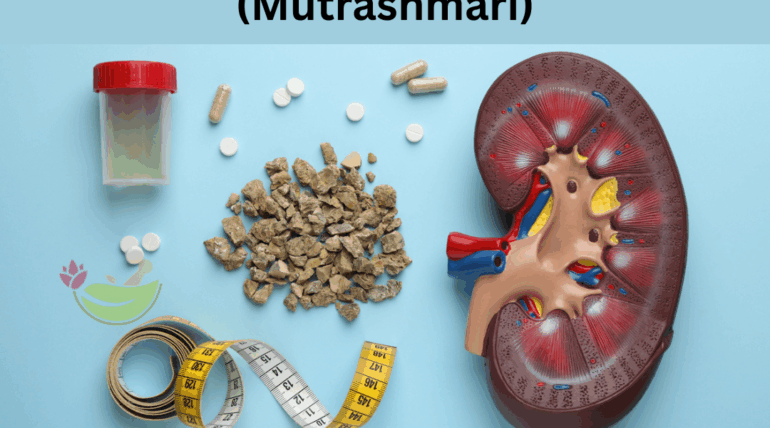
Ayurvedic & Panchakarma for kidney stone treatment at Ayurvidhi Clinic in Pune

Ayurvedic & Panchakarma Treatment for Kidney Stones (Mutrashmari)

Kidney stones are one of the most common and painful urinary disorders seen today. Known as Mutrashmari in Ayurveda, this condition occurs when mineral deposits accumulate and form hard stone-like masses in the kidneys or urinary tract.
Poor diet, dehydration, stressful lifestyle, and improper metabolism have made kidney stones increasingly common even in younger individuals.

Ayurveda provides a holistic, natural, and effective approach to dissolve stones, relieve pain, prevent recurrence, and improve overall urinary health.


Understanding Kidney Stones in Ayurveda (Mutrashmari)

Ayurvedic texts describe Mutrashmari as a Tridoshaja Vyadhi, mainly dominated by Vaata and Kapha dosha imbalance. When Kapha increases, it causes thickening and accumulation of minerals, while aggravated Vaata leads to obstruction and pain.

There are different types of kidney stones in Ayurveda based on dosha dominance, but the general treatment focuses on:

  • Removing obstruction

  • Regulating urine flow

  • Breaking down the stone

  • Preventing recurrence through detox and diet


Causes of Kidney Stones

1. Lifestyle & Dietary Causes
  • Drinking insufficient water

  • Excess intake of salty, sour, spicy, and oily foods

  • High consumption of tea, coffee, alcohol, and aerated drinks

  • Eating food containing high oxalates (spinach, nuts, chocolate)

  • Skipping meals or eating incompatible foods

2. Metabolic Causes
  • High calcium or uric acid levels

  • Poor digestion (weak Agni)

  • Excessive sweating

3. Other Causes
  • Holding urine for long periods

  • Sedentary lifestyle

  • Genetic predisposition

Ayurveda emphasizes that weak digestion and impaired metabolic fire play a major role in stone formation.


🔍 Symptoms of Kidney Stones (Mutrashmari)

  • Sharp, severe pain in the lower back, abdomen, or sides

  • Radiating pain toward the groin

  • Burning sensation or pain during urination

  • Blood in urine (Hematuria)

  • Frequent urge to urinate

  • Nausea, vomiting

  • Reduced urine output

  • Cloudy or foul-smelling urine

Pain can be intermittent or constant depending on the size and movement of the stone.


🌿 Ayurvedic Treatment of Kidney Stones

Ayurvedic treatment focuses on breaking the stone (Ashmaribhedana), flushing it out naturally, reducing pain, and preventing recurrence by balancing doshas.

1. Herbal Medicines (Aushadhi Chikitsa)

Some commonly used Ayurvedic herbs and formulations:

  • Helps break stones and clears urinary obstruction

  • Known as the stone-breaking herb

  •  Diuretic, anti-inflammatory, improves urine flow

  •  Reduces swelling and detoxifies kidneys

  •  Dissolves calcium oxalate stones

  • Strengthens kidneys and urinary tract

The herbal Treatment work synergistically to dissolve stones and improve kidney function.


🧴 2. Panchakarma Treatment for Kidney Stones

Panchakarma is extremely effective for detoxifying the urinary system and preventing recurrence.

💧 1. Virechana (Therapeutic Purgation)
  • Eliminates excess Pitta and toxins from the body

  • Reduces inflammation and burning sensation

🫙 2. Basti (Medicated Enema Therapy)
  • Best for Vaata imbalance, which causes obstruction and severe pain

  • Specific bastis like Dashmool Basti relieve spasm and facilitate stone movement

💆 3. Snehana & Swedana (Oil Massage & Steam)
  • Relaxes lower abdominal muscles

  • Reduces pain and supports easy passage of stones

🌿 4. Uttarbasti (Specialized Therapy – done cautiously under expert supervision)
  • Helps in chronic urinary tract obstructions

  • Effective in recurring kidney stones

🌾 5. Hydration Therapy with Ayurvedic Decoctions
  • Special herbal decoctions are used to flush out stones naturally

These therapies reduce pain, detoxify kidneys, and improve urinary flow without surgical intervention (for small to medium stones).


🍃 Diet & Lifestyle for Kidney Stone Prevention

✔️ What to Include
  • 8–10 glasses of water daily

  • Coconut water

  • Barley water

  • Horse gram soup

  • Light, easily digestible meals

  • Fresh fruits like pomegranate, banana, and watermelon

❌ Avoid
  • Tomatoes (seeds), brinjal, spinach, beetroot

  • Caffeine and energy drinks

  • Excess salt and sour foods

  • Red meat and oily foods

  • Alcohol

🧘 Lifestyle
  • Don’t hold urine

  • Regular walking and gentle yoga

  • Maintain healthy digestion


🌼 Benefits of Ayurvedic & Panchakarma Treatment

  • Natural stone dissolution

  • Pain relief without sedation

  • Detoxification of kidneys and urinary tract

  • Strengthens renal function

  • Prevents recurrence

  • No side effects

  • Improves digestion and metabolism


Conclusion

Kidney stones can be extremely painful, but Ayurveda offers a safe, holistic, and effective solution that targets the root cause rather than only treating symptoms.
At Ayurvidhi Clinic through our expert and widely tested combinations of stone-dissolving herbs, Panchakarma therapies, dietary changes, and lifestyle modifications, kidney stones we managed naturally and future recurrences prevented.

“If you’re dealing with kidney stones, don’t wait for complications. Ayurvidhi Clinic offers scientifically-backed Ayurvedic treatment that dissolves stones naturally and prevents recurrence.
📞 Call now to book your appointment @9511953471.”

@https://share.google/GQkGaD2JRXiYhI3p0

or WhatsApp https://wa.me/message/MBTFCXKULPB2K1

“Healthy kidneys, healthy life — choose Ayurveda for natural healing.”

Read More

The Ultimate Guide to Panchakarma Treatment: A 3 Step guide to Detoxify Your Body

You all know panchakarma therapies. Let’s revise it again Vamana, Virechana, Basti, Nasya & Raktamokshana are the five karma therapies known as Panchakarma. Its merits, demerits, indications & contraindications will be discussed in another blog. In this blog will see how they are planned in three simple steps to give you maximum benefits.

Before jumping the world of panchakarma therapies one should how it is been scheduled. This will help to understand the nature of procedure and its benefits.

For an e.g. while preparing a meal or any dish we do pre-cooking, cooking & post-cooking cleaning, the same thing happens with panchakarma therapies, it’s a three-step program designed for every one of the panchakarmas. They are termed as Purva-karma, Pradhana-karma & Paschat-karma.


  • 1) Purva-karma: (Pre-Panchakarma measures or procedures):

Before doing the main procedure one has to under go the pre operative measures.  It’s a simple two types of procedure executed before panchakarma as a preoperative measure. It has two 1) Snehana, and 2) Swedana; both this procedure is carried out for 3 to 7 days as per one Prakriti, Agni, Bala, health condition, age, etc.

A) Snehana: It is oleation therapy done by using oiling agents like ghee & oil. Based on application or introduction it’s been categorized into internal application (Abhyantar Snehana) & external application (Baahya Snehana).

  • Baahya Snehana: It is a procedure of applying oil externally to the body with gentle pressure in such a manner to get absorbed in the body. It is a type of body massage with herbal ayurvedically prepared oils.
  • Abhyantar Snehana: The introduction of oil or ghee in such an amount, that it gets digested easily with increasing dose of it every day up to getting specific results is known as abhyantar snehana. In simple terms, it is the drinking of ghee.

B) Swedana: Making the body sweet by using various types of hot fomentation is known as swedana. It is done by steaming the body with steam of ayurvedic decoction.

What is the necessity of Snehana & Swedana??

Both the procedures (Both types of Snehana & Swedana) are very helpful in loosening up the toxins from the system. This helps them to bring the toxins into the elementary canal or system from where they can be drained out of the body from the nearest exit easily.

Both types of Snehana & Swedana are prescribed before Vamana, Virechana & Raktamokshana. While before Basti & Nasya required only external Snehana & Swedana are done.

2) Pradhana karma:

This is a day therapy program to expel the toxins from the body through the nearest exits they need. These are;

  • Vamana– toxins from the stomach are expelled through the mouth with the help of emesis.
  • Virechana– toxins from below the stomach are expelled out through the anal opening with purgative medicine
  • Basti– toxins present in the colon are expelled by introducing the enema through the anal opening & then it carries all toxins out with it.
  • Nasya– toxins present at the head and organs attached to it are expelled out from the nostrils.
  •  Raktamokshana– toxins present in the blood are expelled with the help of jalauka (leech) or syringes from the skin & veins.


3) Paschat karma or Uttar Karma (Post-operative measures):

After completing any of the main karma from panchakarma postoperative measures are a must. These are simple diet rules designed according to the condition of the body to recover faster without any discomfort.  The diet regulation starts from having just boiled rice water, and then shifts to gruel, after that khichadi then after that to regular roti sabji. This also continues up to 3 to 5 days.

What is the necessity of the Paschat karma??

The paschat karma is adopted to regulate the homeostasis of the body after doing panchakarma. During the first two panchakarma procedures, Agni has to go through various changes that lead to weakening Agni or Agni-Mandya. This diet management helps to restore its ability to normal in a very short time.  This also prevents from getting unnecessary complications after the panchakarma.

Doing the panchakarma in the right way helps to flush out toxins from the body, helps to balance doshas & dhaatus equilibrium, boosts immunity, and builds better health.

At Ayurvidhi Clinic we provide the best panchakarma in an authentic ayurvedic way.

Read More