

Man experiencing diabetes fatigue and stress alongside Ayurvedic doctor offering natural diabetes relief with Panchakarma treatment in Pune

Reclaim Your Vitality: Transformative Diabetes Ayurvedic Treatment in Pune

 Controlled Numbers, Yet Low Energy?

If you or a loved one in Pune live with diabetes, you likely know this frustrating reality: your morning glucometer reading shows “controlled” numbers thanks to daily medication, yet you still wake up feeling exhausted, sluggish, and constantly dependent on pills.

A common myth is that diabetes is strictly a blood sugar problem—that as long as the glucose reading is within range, the body is healthy. In reality, modern blood sugar medications often mask the systemic breakdown happening underneath. While modern pharmaceuticals force sugar out of the bloodstream, they rarely address why your cell metabolism stalled in the first place. This is where Ayurveda steps in: shifting the focus from temporary symptom control to complete metabolic restoration from the ground up.

Understanding “Madhumeha” and Metabolic Agni

In classical Ayurvedic medicine, diabetes is categorized under Prameha, with its chronic, systemic stage known as Madhumeha (literally, “honey urine”). Ancient texts like the Charaka Samhita explain that Madhumeha is primarily a disorder of Medovaha Srotas (fatty tissue channels) and Mutravaha Srotas (urinary channels).

[Weak Agni / Slow Digestion] ──> [Ama (Toxins) Accumulation]
                                            │
                                            ▼
[Vata & Kapha Imbalance] ──> [Blocked Medovaha Srotas (Metabolic Channels)]
                                            │
                                            ▼
                             [Madhumeha / Diabetes Symptoms]


The Ayurvedic Mechanism

  • Kapha Dominance & Sluggish Agni: The early stage of Prameha is driven by aggravated Kapha Dosha paired with a weakened digestive fire (Mandagni). When Agni cannot process food efficiently, unrefined metabolic toxins (Ama) accumulate.

  • Channel Obstruction: This thick, sticky Ama circulates through the bloodstream and physically blocks the Srotas (micro-channels responsible for cellular nutrition).

  • Vata Degeneration: As body tissues (Dhatus) become starved of nutrients due to channel blockages, Vata Dosha becomes aggravated, causing tissue depletion, persistent fatigue, and peripheral numbness.

The Pune Lifestyle Context

This dual Kapha-Vata imbalance is accelerated by Pune’s modern environment. Long sedentary desk hours across the IT corridors of Hinjewadi and Magarpatta, combined with late-night eating, irregular sleeping habits, and high daily stress, severely suppress Agni. Add to this Pune’s sudden climatic shifts between seasons—which perturb Vata—and the metabolic channels quickly become clogged, setting the stage for insulin resistance and chronic diabetes.

Why Panchakarma Delivers Cellular-Level Results

Over-the-counter herbal supplements like karela or jamun juice can offer mild support, but chronic metabolic impairment requires systematic cellular purification. At our Pune clinic, we utilize targeted Panchakarma therapies to remove stubborn Ama and reactivate your metabolic machinery.

1. Udvartana (Herbal Fat-Metabolism Scrub)

Udvartana involves a dry, deep-tissue massage using specialized herbal powders (such as Triphala and Kottamchukkadi). Performed in a specific upward rhythm, this therapy breaks down subcutaneous fat deposits, stimulates lymphatic drainage, opens blocked skin pores, and improves cellular insulin receptivity.

2. Virechana (Therapeutic Purgation)

Since the liver and pancreas are the central hubs of metabolism, Virechana is the premier detox therapy for Madhumeha. By administering medicated ghee followed by a controlled herbal purgation, we purge excess Pitta and deep-seated Ama from the liver and gallbladder, resetting liver glycogen storage and clearing systemic inflammation.

3. Basti (Medicated Enema Therapy)

To prevent the degenerative complications of long-standing diabetes (such as neuropathy and structural weakness), specialized Niruha (decoction) and Anuvasana (oil) Bastis are administered. Basti directly balances Vata Dosha at its primary site—the colon—nourishing deep tissue layers and improving vascular circulation.

 4 At-Home Habits to Spark Your Metabolic Fire

Clinical detox must be supported by a daily Pathya (nourishing routine). Start incorporating these four habits into your daily Dinacharya:

  1. Switch to Whole Grains: Replace refined wheat and white rice with barley (Yava), finger millet (Ragi), and sorghum (Jowar). Classical texts explicitly highlight barley as the primary grain for balancing Kapha and clearing metabolic blockages.

  2. Sip Warm Spiced Water: Ditch ice-cold drinks entirely. Drink warm water infused with half a teaspoon of crushed fenugreek seeds (Methi) or dry ginger powder (Sunthi) throughout the day to kindle your Agni.

  3. Engage in 45 Minutes of Brisk Walking: Physical movement is mandatory to balance Kapha. A 45-minute brisk walk daily, ideally during early morning hours, stimulates glucose uptake in skeletal muscle independent of insulin.

  4. Avoid Divaswapna (Daytime Sleeping): Sleeping during the day severely aggravates Kapha Dosha, slows down digestion, and increases circulating Ama. Aim for a consistent nighttime sleep routine instead.

Take the First Step Toward Root-Cause Healing

You do not have to settle for escalating medication dosages and lingering daily fatigue. By addressing the root cause of Madhumeha through classical Panchakarma, custom herbal formulations, and personalized lifestyle guidance, you can restore your energy and protect your long-term health.

Ready to transform your metabolic health?

At Ayurvidhi Clinic, located in [Your Area], Pune, we provide individualized Ayurvedic protocols designed specifically for your body constitution (Prakriti).

FAQ (Schema-Ready)

Q1: Can Diabetes Ayurvedic Treatment completely reverse my diabetes?

In newly diagnosed cases or pre-diabetes, restoring Agni and removing Ama can lead to complete reversal. For long-standing diabetes, Ayurveda helps stabilize blood sugar, reduces dependency on heavy medications under strict supervision, and prevents secondary complications like neuropathy and retinopathy.

Q2: Is Panchakarma safe for chronic diabetic patients?

Yes. Every Panchakarma procedure is customized based on a thorough clinical assessment. Therapies like Udvartana and Virechana are highly monitored and modified according to the patient’s physical strength, blood sugar parameters, and overall health.

Q3: How long does it take to see improvements in blood sugar and energy levels?

Most patients report noticeable improvements in energy, digestion, and sleep within 2 to 3 weeks of beginning targeted herbs and diet adjustments. Blood sugar stabilization and structural metabolic improvements typically occur over a 2 to 4 month structured protocol.

Q4: Can I continue my modern diabetes medications while starting Ayurvedic treatment?

Yes, absolutely. Never stop your current medications abruptly. Our Ayurvedic physicians work alongside your existing prescription, gradually tapering dosages only as your body’s internal metabolism improves and your blood parameters stabilize naturally.

About the Vaidya

This article is authored by Dr. Kaustubh Bathe, a Senior Ayurvedic Physician and Metabolic Health Specialist at Ayurvidhi Clinic, Pune. Specializing in classical Panchakarma and chronic disease management, Dr. Dr. Kaustubh Bathe has successfully guided hundreds of patients across the Pune region toward natural blood sugar balance, metabolic reversal, and renewed vitality

Read More
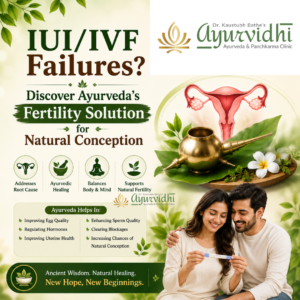
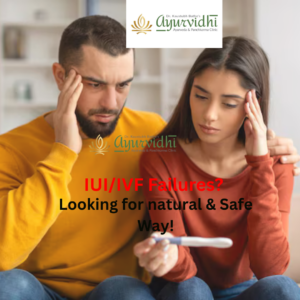
Distressed couple looking at a negative pregnancy test, representing IUI/IVF failure, with a message promoting natural and safe Ayurvedic fertility treatment.

IUI/IVF Failures? Discover Ayurveda’s Fertility Solution for Natural Conception

Introduction

Going through one or multiple IUI or IVF failures can be emotionally exhausting. Many couples come with a heavy heart, asking:

“Why did it fail even after doing everything right?”

Distressed couple looking at a negative pregnancy test, representing IUI/IVF failure, with a message promoting natural and safe Ayurvedic fertility treatment.
Facing IUI/IVF failures? Ayurveda offers a natural and safe approach to improve fertility by treating the root cause and restoring hormonal balance.

This feeling of uncertainty, stress, and helplessness is completely valid.

From an Ayurvedic perspective, fertility is not just about procedures—it is about the overall balance of the body, mind, and reproductive system. When deeper imbalances exist, even advanced treatments may not give the desired results.

Ayurveda offers a holistic fertility solution that focuses on improving the body’s natural ability to conceive.


Ayurvedic Understanding of IUI/IVF Failures

In Ayurveda, repeated conception failure is often linked to:

  • Beeja Dushti (poor quality of sperm/ovum)
  • Kshetra Dushti (unhealthy uterine environment)
  • Artava or Shukra Dhatu Kshaya (depletion of reproductive tissue)

Successful conception requires:

  • Healthy ovum & sperm
  • Proper uterine environment
  • Balanced Dosha

🔍 Dosha Involvement

  • Vaata Dosha (Apana Vaata)
    Controls ovulation, implantation, and reproductive movement
    👉 Most commonly disturbed in IVF failures
  • Pitta Dosha
    Responsible for hormonal balance and metabolism
  • Kapha Dosha
    Supports nourishment and stability of reproductive tissues

👉 In most cases:
Vata imbalance + Tissue depletion = Failed implantation or poor embryo support


🔥 Role of Agni & Aama

  • Weak digestion (Mandagni) leads to improper tissue formation
  • Toxin accumulation (Aama) blocks reproductive channels (Srotas)

👉 Result:

  • Poor egg/sperm quality
  • Hormonal imbalance
  • Failed implantation

Common Causes for Recurrent IUI ? IVF Failure:

  • Poor egg or embryo quality,
  • Chromosomal abnormalities,
  •  Uterine implantation issues
  • Sperm Quality

Common Causes According to Ayurveda


🍽 Dietary Factors

  • Processed and junk food
  • Cold and refrigerated meals
  • Lack of nourishing foods like ghee and milk

🌙 Lifestyle Factors

  • Late-night sleeping (Ratri-jagaran)
  • Irregular daily routine
  • Excess physical or mental exertion

How late night sleeping affects your fertility, to know more about it click here!


🧠 Mental / Stress Factors

  • Anxiety after failed cycles
  • Emotional stress and pressure
  • Overthinking

Mental Stress can be well managed by Shirodhara. For information about Shirodhara click here.

👉 Ayurveda clearly explains:
“Mental stress directly affects reproductive health.”


🩺 Symptoms Explained in Simple Language

After failed IUI/IVF cycles, patients may notice:

  • Repeated failure to conceive
  • Irregular or disturbed menstrual cycles
  • Hormonal imbalance
  • Fatigue and low energy
  • Reduced confidence and stress

🌿 Ayurvedic Line of Treatment for IUI/IVF Failures

Ayurveda focuses on correcting the root cause, not just the outcome.


🧹 1. Shodhana (Detoxification)

Done after proper evaluation for better & faster recovery. Shodhana is wide term for Panchakarma treatment. It highly recommended for removal of toxins from the body. It also helps to rejuvenate the body within. Click here to know more about the Panchakarma Treatment. 


Common therapies:

  • Vamana (Kapha Detox) Improves hormonal balance & Reset Reproductive System
  • Virechana (Pitta detox) → Improves hormonal balance
  • Basti (medicated enema) → Best therapy for Vaata correction

👉 Helps in:

  • Removing toxins from the body
  • Preparing the body for conception
  • Improves Sperm & Egg qaulity
  • Improves Sexual Health
  • Balances the hormonal health & regulates AMH level

🌱 2. Shamana (Balancing Treatment)

Includes:

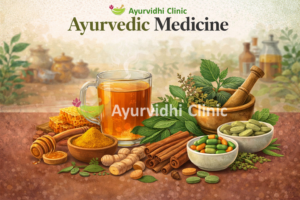
“Ayurvedic medicine with herbal tea, turmeric, honey, ginger, cinnamon, medicinal herbs, and tablets representing natural healing at Ayurvidhi Clinic.”
“Ayurvedic medicine focuses on holistic healing using natural herbs, medicinal teas, and time-tested formulations. At Ayurvidhi Clinic, we offer personalized Ayurvedic treatments to restore balance, boost immunity, and promote long-term wellness naturally.”
  • Herbal medicines
  • Rasayana (rejuvenation therapy)
  • Fertility-enhancing formulations

👉 Focus:

  • Improve egg and sperm quality
  • Strengthen reproductive tissues

💆 3. Role of Panchakarma in Fertility

Panchakarma plays a crucial role after failed IVF/IUI.

Key therapies:

  • Uttar Basti → Direct action on uterus/ovaries
  • Basti therapy → Balances Apana Vaata
  • Abhyanga + Swedana → Improves circulation

👉 These therapies help in:

  • Improving uterine receptivity
  • Enhancing implantation potential

🌿 Benefits of Ayurveda for Reproductive Health

  • Improves egg and sperm quality
  • Enhances uterine health
  • Balances hormones naturally
  • Reduces stress impact
  • Supports natural conception

👉 Ayurveda works by strengthening the body from within.


🥗 Diet & Lifestyle Advice (Pathya-Apathya)


Pathya (Recommended)

  • Warm, freshly cooked food
  • Cow’s ghee and milk
  • Dry fruits (almonds, dates)
  • Seasonal fruits
  • Light, digestible meals

Apathya (Avoid)

  • Junk and processed food
  • Cold drinks and ice cream
  • Excess tea/coffee
  • Late-night sleeping

🌿 Lifestyle Recommendations

  • Sleep before 10 PM
  • Follow daily routine (Dinacharya)
  • Practice yoga for fertility

  • Manage stress (meditation/pranayama)


⏳ Expected Results & Healing Timeline

Ayurveda works gradually and deeply.

  • Initial improvement: 4–6 weeks
  • Hormonal balance: 2–3 months
  • Improved fertility health: 3–6 months

👉 Results depend on:

  • Age
  • Body constitution (Prakriti)
  • Severity of imbalance
  • Consistency in treatment

🌿 Why Ayurvedic Treatment is Different


🌱 Holistic Approach

Focuses on complete body balance, not just reproductive organs


🧬 Personalized Treatment

Each patient is treated based on:

  • Dosha imbalance
  • Lifestyle
  • Body constitution

Long-Term Fertility Support

  • Improves natural conception ability
  • Supports future pregnancy health

🩺 When to Consult an Ayurvedic Doctor

You should consider consultation if:

  • Multiple IUI/IVF failures
  • Hormonal imbalance
  • PCOS or irregular cycles
  • Low AMH or poor ovarian reserve
  • Male fertility issues

Conclusion

Facing IUI or IVF failure can feel discouraging, but it is not the end of your fertility journey.

From an Ayurvedic perspective, it often indicates a deeper imbalance that can be corrected with the right approach.

With proper treatment, lifestyle correction, and patience, the body can regain its natural reproductive strength.


📞When to consult an Ayurvedic Doctor

If you are experiencing repeated fertility treatment failures,you may consider consulting a qualified Ayurvedic doctor for a personalized evaluation. 

A holistic Ayurvedic approach can help you understand your body better and support your fertility journey naturally.

Why to Choose Ayurvidhi Clinic for your ayurvedic treatment journey?

Illustration showing Ayurvedic fertility treatment for IUI/IVF failures, featuring the female reproductive system, Uttar Basti instrument, herbal elements, and a happy couple symbolizing natural conception success.
Facing IUI/IVF failures? Ayurveda offers a natural fertility solution by addressing root causes, balancing hormones, and improving chances of natural conception.

If you’ve experienced repeated IUI or IVF failures, Ayurveda offers a deeper, root-cause-based path to natural conception by restoring hormonal balance, improving reproductive health, and strengthening overall vitality. At Ayurvidhi Clinic, this holistic approach is combined with personalized care and classical Ayurvedic principles to help couples achieve sustainable fertility outcomes. Under the expert guidance of Dr. Kaustubh Bathe, known for his clinical excellence, compassionate approach, and success in managing complex infertility cases, patients receive safe, natural, and result-oriented treatment designed to support healthy conception and long-term reproductive wellness.


For consultation & appointment booking kindly click here!


Disclaimer

This article is for educational purposes only and should not be considered medical advice.
All treatments should be taken under the supervision of a qualified Ayurvedic physician.

Read More