
Say goodbye to Hair-fall with Ayurvedic & Panchakarma Treatment

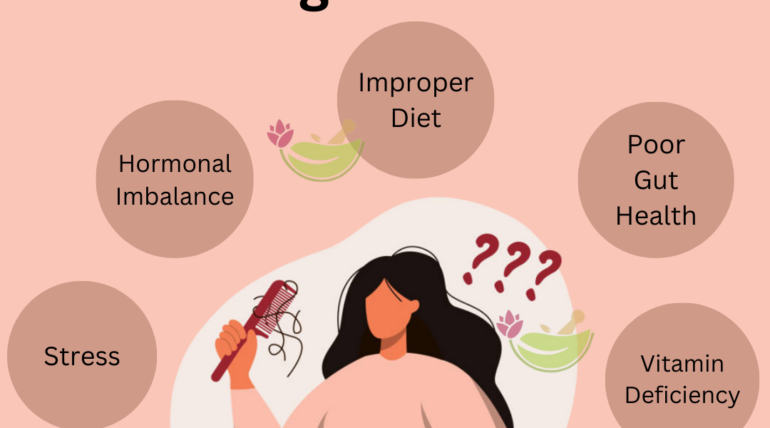
Hair fall is a common health problem for everyone in today’s era. Are you also one of them? And looking for an effective natural way to pause, restore & regrow your hair? Ayurveda has a traditional age-old and effective solution to your hair fall problem. In this blog, we will see the causes, ayurvedic and panchakarma treatments for hair fall.

Concept of hair fall or hair loss:

As per studies on average a healthy person shreds near about 100 hair strands (more or less). This also gets replaced by a new follicle in a certain period. But if the falling or losing the hair is more and regeneration or recovery is less then it is a matter of worry.  Hair fall occurs due to some nutritional deficiency or any other health problem.

Ayurvedic concept for hair loss:

Ayurveda has described its theory for every disease same with hair loss. Ayurveda theory revolves around Vaata, Pitta & Kapha. Due vitiation of the doshas mostly pitta it causes dilation of the hair follicle which causes the easy plucking of hair from its root. Whereas kapha and vaata mix up together and close the follicle which restricts the growth of hair.

Ayurvedic causes for hair loss:

  • Late night awakening
  • Irregular eating habits
  • Digestive problems: such as acidity, I.B.S., etc.
  • Consuming of alcohol
  • Smoking
  • Pitta imbalance factors: Spicy food, Junk food
  • Anger
  • Stress
  • Previous history of fever, typhoid, or other chronic diseases

Other causes for hair loss:

  • Vitamin B12 deficiency
  • Vitamin D deficiency
  • Low heamoglobin
  • Hormonal Imbalance

Types of hair loss:

  • Alopecia totalis
  • Traction Alopecia
  • Alopecia arearta
  • Post-partum hair loss

Ayurvedic Diagnosis for Hair-fall:

Following are some commonly done diagnosis for hair fall in Ayurvedic text

  • Khalitya
  • Rakta Krumi
  • Asthi-Kshaya
  • Pandu

Ayurvedic treatment for hair loss or hair fall:

Ayurvedic treatment for hair loss consists of a unique holistic approach towards correcting lifestyle, diet monitoring, and changes. It also emphasizes some herbal remedies to stop hair loss and panchakarma treatment for boosting hair growth and eliminating toxins from the body.


Ayurvedic remedies for hair loss:

Following are some medications can be used while treating hair fall.

  1. Half a spoon of Chyavanprasha in the morning on an empty stomach
  2. Half a spoon of Aamla powder with honey in the morning empty stomach
  3. Brahmi Churna 250 mg with honey or warm water to reduce hair falls due to stress, tension & anxiety.
  4. Asthi-poshak vati 250 mg twice a day can help to promote your hair growth.
  5. Narasimha-Rasayana half spoon in the morning on an empty stomach


Oil recommended for restoration of hair and promote hair growth:

  1. Vaata Jatadi Tailam
  2. Mahabrungaraaj Tailam
  3. Sukuntalaam Oil by Ayurvidhi Clinic
  4. Japa-kusumadi Tailam

Above mentioned are the few ayurvedic medicated hair oil to promote hair growth.  These all are rich all essential ayurvedic herbs that will help with hair problems. All the above tailam when used along with the proper ayurvedic treatment and diet shows a good improvement.

Our Sukuntalam Hair Oil by Ayurvidhi Clinic is specially made with Aamla, Cow milk, Brahmi, Jatamansi, etc., and processed by Kshirpaaka Vidhi as per ayurvedic text.


Panchakarma Treatment for Hair Loss:

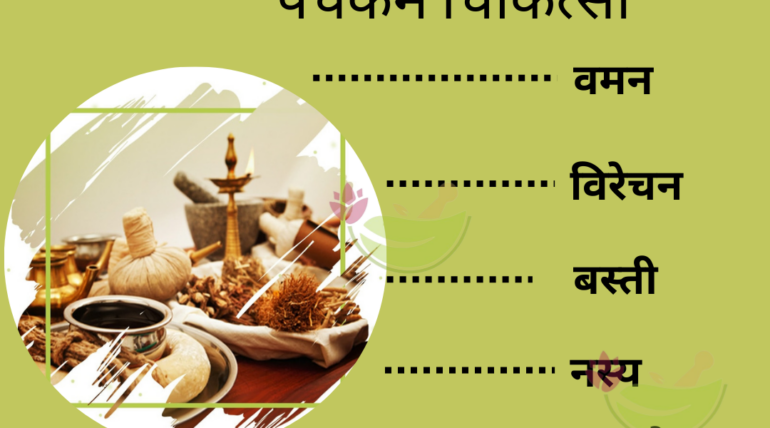
Panchakarma is a detoxification therapy in Ayurvedic treatment. It is useful in expelling out the toxins accumulated in the system by using various therapeutic procedures. In hair loss, these techniques are very useful to restore hair fall and promote hair growth.

Vamana helps to remove the toxins from the upper digestive tract which helps for better absorption of minerals and medicine for hair growth.

Basti is one of the best treatments for hair loss. The introduction of basti is into the rectum a site for vaata dosha. This helps to pacify the vaata dosha and promote bone health which ultimately helps in restoring the balance of hair structure and health.

Nasya is a nutritive treatment that directly acts on the hair root and matrix.  The medicine is generally in the form of drops introduced through the nostrils.

Rakta-mokshana is bloodletting procedures.  The impure blood in the scalp region is the reason for to development of various scalp-related diseases like dandruff, boils, etc. which ultimately results in hair fall. Expelling out the impure blood can help stop hair fall.

Shirodhara continues dropping oil on the forehead. It helps to calm the mind and reduces stress and also helps to restore hormonal imbalance which is one cause of hair fall. It also helps to nourish the scalp and hair.

Ayurvedic diet for healthy hair growth:

To promote hair growth one should have a complete wholesome food to get optimum nutrition for hair growth. It should consist of all types of green vegetables, fruits, pulses, and nuts. Ghee should be included in the meal. As ghee is an abundant source of Vitamin B, D, E & K it helps the minor elements of the body which promotes hair growth.

Coconut, sesame seeds, dates; walnuts are some superfood that boosts hair growth, and try to add them to your diet accordingly.

Things to avoid while suffering from hair loss are fermented and deep-fried food, extremely sour food, stale and dry food, etc.

Yoga and pranayama to avoid hair fall:

One should avoid stress to prevent hair loss. For that regular moderate exercise along with some pranayama like Anulom-vilom, Bhrahmari, Sitali &Sitkari are advised to do regular basis.

Yoga such as Chandra-namaskar, Parvatasana, Adhomukha- Shwanasana, and Vrukshasana, are advised for good hair growth.


Conclusion:

Treating hair fall or hair loss with Ayurveda has very good results due to its holistic approach. The ayurvedic remedies along with panchakarma and a good ayurvedic diet and lifestyle modification as per the ayurvedic regimen will help you in restoring hair loss & health.

At Ayurvidhi clinic we have successfully stopped hair loss of various patients and helped them to restore their hair health with pure ayurvedic & panchakarma treatment.

Address: Dr. Bathe’s Ayurvidhi Clinic – Ayurveda & Panchakarma clinic. Office no. 309, Park Plaza Business Centre, Porwal Road, Lohegaon, Pune – 411047


Read More

पंचकर्म उपचार कसे कार्य करतात ??? : सहज सोपे सरळरित्या

मराठी व्याकरण आठवतयनं??? त्यात जसे आपण समास शिकलोय तसाच पंचकर्म हा सामासिक शब्द तयार झालाय.  पंचकर्म म्हणजे पाच कर्मांचा समूह. ते कोणते तर अनुक्रमे वमन, विरेचन, बस्ती, नस्य आणि रक्तमोक्षण. ह्यांचे फायदे नुकसान, कोणी कारावे कोणी करु नये हे वेगळ्या ब्लॉग मध्ये सविस्तर बघू. आजच्या विषयला धरुन पुढे जाऊ.

कुठला ही पदार्थ  किंवा पाककृती करतांना त्याला जसे पूर्व तयारी, कृती आणि नंतरची आवरावर असते तसेच पंचकर्म ह्या विधीला सुद्धा पूर्वकर्म, प्रधानकर्म आणि उत्तरकर्म किंवा पश्चात कर्म असतात.

पंचकर्माचा समावेश उपयोग आयुर्वेदात शोधण चिकित्सा म्हणून मुख्यत्वे वर्णन केलं आहे.  शोधण म्हणजे नेमके काय तर शरीरातील दूषित पदार्थ म्हणजे दोष बाहेर काढणे. पण ह्याची गरज काय? हेच दोष शरीरात राहून व्याधी घटक म्हणून कार्य करतात आणि व्याधी निर्मिती घडून आणतात. त्यामुळे ह्यांना म्हणजेच दोषांना शोधण क्रिया (पंचकर्माद्वारे ) बाहेर काढणे गरजेचे आहे.

पूर्वकर्म:

कुठलेही मोठे कार्य करतांना त्याची आपण  पूर्व तयारी करतो,  तसेच पंचकर्म करतांना पूर्वकर्म करणे तेवढीच  गरजेचे असते.

पूर्वकर्ममध्ये   दोन गोष्टी महत्वाच्या त्यात समाविष्ट आहेत 1. स्नेहन आणि 2. स्वेदन .

स्नेहन : स्नेह म्हणजे स्निग्ध पदार्थ. शरीरात स्निग्ध पदार्थ प्रविष्ट करणे म्हणजे स्नेहन . हे करायला दोन मार्गाद्वारे शरीरात प्रविष्ट केले जाते. १ . बाह्य मार्ग   २.अभ्यांतर मार्ग

बाह्य स्नेहन : शरीरावर बाहेरुन तेल आदि स्निग्ध पदार्थ लावून ते जिरेल अशा पद्धतीने हळुवारपणे संपूर्ण शरीरावर चोळणे म्हणजे बाह्य स्नेहन.

अभ्यांतर स्नेहन :  पचेल एवढ्या मात्रेत स्नेह पिणे व तो वर्धमान मात्रेत प्रती दिवस वाढवणे  या प्रक्रियेला अभ्यांतर स्नेहन म्हणतात.  साध्या सोप्या भाषेत तूप पिणे.

स्वेदन : शरीराला उष्ण उपचारांनी स्वेद म्हणजे घाम आणण्या क्रियेला स्वेदन असे म्हणतात. ही क्रिया औषधी काढ्याला तापवून त्याच्या वाफेणी केली जाते.

वरील दोन्ही कर्म रोज ३, ५ किंवा ७ दिवस वैद्य तुमची प्रकृती, वय, अवस्था , अग्नि, दोष, बल यांचा विचार करुन ठरवतात.

पण स्नेहन आणि स्वेदन  कशासाठी ?

 वरील दोन्ही उपक्रम हे शरीरातील घट्ट चिकटलेले व लीन झालेले दोषांना द्रवीत करुन  सुट्टे करायला मदत करते.  त्यामुळे दोष हे कोष्ठात आणावायस मदत करतात. जेणे करुन ते जवळच्या बाह्या मार्गाने शरीरा बाहेर काढले जातील अगदी सहज रित्या.

दोनही प्रकारचे स्नेहन आणि स्वेदन हे पूर्वकर्म प्रामुख्याने वमन, विरेचन, रक्तमोक्षण पूर्वी आवश्यक रित्या केले जाते. तर बस्ती आणि नस्य कर्म करण्या पूर्वी बाह्या स्नेहन आणि स्वेदन आवश्यक असते.    

प्रधान कर्म किंवा मुख्य कर्म :

हा प्रधान कर्म  विधी एका दिवसाचा असतो. या मध्ये कोष्ठात आणलेले दोष जवळच्या मार्गाने बाहेर काढले जातात.  जसे,

वमन – आमाशयात आलेले दोष ऊर्ध्व मार्गाने तोंड वाटे  उलटीद्वारे

विरेचन –  पक्वाशयात  आलेले दोष अधोमार्गाने शौचा वाटे  जुळबाद्वारे

बस्ती – पक्वाशयात  असलेले दोष बस्ती औषधांद्वारे शौचा वाटे  शरीरात प्रविष्ट करुन अधोमार्गाने बाहेर काढले जातात

रक्तमोक्षण – रक्तामधील दोष सिराद्वारे जलौका किंवा syringe च्या सहाय्याने

नस्य – शिर व त्याच्या संलग्न अवयव मधील दोष नाका वाटे  बाहेर काढले जातात


पश्चातकर्म किंवा उत्तरकर्म :

मुख्य कर्म व्यवस्थितरीत्या पार पाडल्यावर केली गेलेली आहार योजना हे पश्चात कर्मात येते. प्रधान करमानंतर येणारा थकवा आणि पुनः शरीर बल वाढवण्यासाठी आहार हा महत्वाचा भाग असतो. तो सहज पणे पाचवा या साथी प्रथम कोष्ण जलपान, कढण, पातळ पेज, खिचडी आणि मग भाकरी भाजी अशी उपाययोजना केली जाते . या प्रक्रियेला साधारण ३ ते ५ दिवसांचा कालावधी लागतो.

पश्चातकर्म किंवा उत्तरकर्म यांची आवश्यकता :

पंचकर्म नंतर शरीर बल हे अल्प असते व अग्नि किंचित मंद झालेला असतो त्यामुळे त्यावर लगेच पचायला जड असे पदार्थ सेवन केल्यास बलहानी होऊन उपद्रव स्वरूप नवीन व्याधी उत्पत्ति होऊ शकते. ते टाळण्यासाठी हा उपक्रम. आणि ह्या विधीने पंचकर्म केलयवर आहार सेवनाने अल्प जे दोष शरीरात राहतात त्यांचे  देखील पाचण होण्यास मदत होते.

अशा प्रकारे संपूर्ण विधिने केलेले पंचकर्म शरीरातील दोष बाहेर काढून तुमचे स्वास्थ्य टिकवण्यास मदत करते.


Read More

The Ultimate Guide to Panchakarma Treatment: A 3 Step guide to Detoxify Your Body

You all know panchakarma therapies. Let’s revise it again Vamana, Virechana, Basti, Nasya & Raktamokshana are the five karma therapies known as Panchakarma. Its merits, demerits, indications & contraindications will be discussed in another blog. In this blog will see how they are planned in three simple steps to give you maximum benefits.

Before jumping the world of panchakarma therapies one should how it is been scheduled. This will help to understand the nature of procedure and its benefits.

For an e.g. while preparing a meal or any dish we do pre-cooking, cooking & post-cooking cleaning, the same thing happens with panchakarma therapies, it’s a three-step program designed for every one of the panchakarmas. They are termed as Purva-karma, Pradhana-karma & Paschat-karma.


  • 1) Purva-karma: (Pre-Panchakarma measures or procedures):

Before doing the main procedure one has to under go the pre operative measures.  It’s a simple two types of procedure executed before panchakarma as a preoperative measure. It has two 1) Snehana, and 2) Swedana; both this procedure is carried out for 3 to 7 days as per one Prakriti, Agni, Bala, health condition, age, etc.

A) Snehana: It is oleation therapy done by using oiling agents like ghee & oil. Based on application or introduction it’s been categorized into internal application (Abhyantar Snehana) & external application (Baahya Snehana).

  • Baahya Snehana: It is a procedure of applying oil externally to the body with gentle pressure in such a manner to get absorbed in the body. It is a type of body massage with herbal ayurvedically prepared oils.
  • Abhyantar Snehana: The introduction of oil or ghee in such an amount, that it gets digested easily with increasing dose of it every day up to getting specific results is known as abhyantar snehana. In simple terms, it is the drinking of ghee.

B) Swedana: Making the body sweet by using various types of hot fomentation is known as swedana. It is done by steaming the body with steam of ayurvedic decoction.

What is the necessity of Snehana & Swedana??

Both the procedures (Both types of Snehana & Swedana) are very helpful in loosening up the toxins from the system. This helps them to bring the toxins into the elementary canal or system from where they can be drained out of the body from the nearest exit easily.

Both types of Snehana & Swedana are prescribed before Vamana, Virechana & Raktamokshana. While before Basti & Nasya required only external Snehana & Swedana are done.

2) Pradhana karma:

This is a day therapy program to expel the toxins from the body through the nearest exits they need. These are;

  • Vamana– toxins from the stomach are expelled through the mouth with the help of emesis.
  • Virechana– toxins from below the stomach are expelled out through the anal opening with purgative medicine
  • Basti– toxins present in the colon are expelled by introducing the enema through the anal opening & then it carries all toxins out with it.
  • Nasya– toxins present at the head and organs attached to it are expelled out from the nostrils.
  •  Raktamokshana– toxins present in the blood are expelled with the help of jalauka (leech) or syringes from the skin & veins.


3) Paschat karma or Uttar Karma (Post-operative measures):

After completing any of the main karma from panchakarma postoperative measures are a must. These are simple diet rules designed according to the condition of the body to recover faster without any discomfort.  The diet regulation starts from having just boiled rice water, and then shifts to gruel, after that khichadi then after that to regular roti sabji. This also continues up to 3 to 5 days.

What is the necessity of the Paschat karma??

The paschat karma is adopted to regulate the homeostasis of the body after doing panchakarma. During the first two panchakarma procedures, Agni has to go through various changes that lead to weakening Agni or Agni-Mandya. This diet management helps to restore its ability to normal in a very short time.  This also prevents from getting unnecessary complications after the panchakarma.

Doing the panchakarma in the right way helps to flush out toxins from the body, helps to balance doshas & dhaatus equilibrium, boosts immunity, and builds better health.

At Ayurvidhi Clinic we provide the best panchakarma in an authentic ayurvedic way.

Read More

Strong from Within: Ayurvedic Management of Osteoporosis

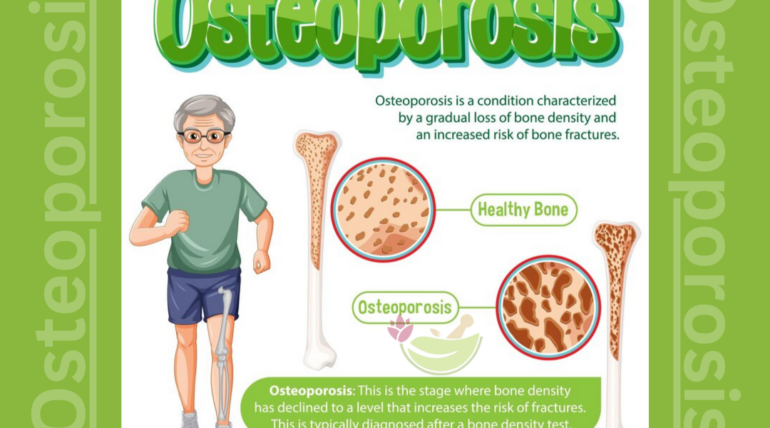
Osteoporosis is a common, often silent, condition that affects millions of people, primarily women, as they age. It weakens bones, making them fragile and more prone to fractures. Osteoporosis may lead to diseases like lower back pain, spondylitis, slipped disc, joint pain, etc.

While conventional medicine offers medications for managing osteoporosis, Ayurveda, the ancient system of holistic healing from India, provides a natural and comprehensive approach to supporting bone health. In this blog, we will explore the causes and risk factors of osteoporosis, delve into Ayurvedic principles regarding it, and discuss natural treatments for maintaining strong and healthy bones.

Understanding Osteoporosis in Ayurveda

In Ayurveda, bone health is closely linked to the balance of Vaata dosha, which governs movement and the nervous system. Osteoporosis is often seen as a manifestation of aggravated Vaata, leading to dryness and brittleness in the bones. In Ayurveda, preventing and managing osteoporosis involves pacifying Vaata while also addressing dietary and lifestyle factors.

Causes and Risk Factors

Aging: As people age, their bones naturally lose density, increasing the risk of osteoporosis.

Hormonal Changes: In women, the drop in estrogen during menopause can accelerate bone loss.

Dietary Deficiencies: A lack of essential nutrients, especially calcium and vitamin D, can weaken bones.

Sedentary Lifestyle: Lack of physical activity can lead to muscle weakness and bone loss.

Family History: A family history of osteoporosis increases the risk.


Ayurvedic Management of Osteoporosis

Ayurveda focuses on treating the root cause rather than fixing the symptoms. As we have seen Osteoporosis is due to Vaata imbalance, so it is necessary to fix it by doing some dietary changes, lifestyle modification, and with some ayurvedic & panchakarma treatment.

Dietary Changes: Ayurveda places great importance on dietary choices for bone health. Include foods rich in calcium, such as leafy greens, sesame seeds, dairy (if tolerated), and almonds. Additionally, focus on foods that balance Vaata, like whole grains, ghee, and cooked foods.

Herbal Remedies: Ayurvedic herbs such as Ashwagandha, Guggul, Bala, Dashmool and Shatavari are known for their bone-strengthening properties. They can be consumed as part of an Ayurvedic regimen or in supplement form.

Abhyanga (Self-Massage): Abhyanga, the practice of self-massage with warm herbal oils, can promote relaxation, reduce Vaata, and nourish the bones. Oil like sesame, coconut, and groundnut oil can be used for abhyanga at home.

Yoga and Exercise: Yoga poses that focus on balance, strength, and flexibility can be instrumental in managing osteoporosis. Weight-bearing exercises, such as walking, can also help improve bone density.

Lifestyle Adjustments: Maintaining proper posture, avoiding overexertion, and managing stress through practices like meditation and Pranayama (breath control) are essential for preventing and managing osteoporosis.

Panchakarma: Ayurvedic detoxification procedures, such as Sarvang Snehan (Therapeutic ayurvedic massage), Sarvang Swedan (Therapeutic Steam), Basti (Therapeutic Enema), Shashtik Pinda Sweda can help for building the strength of bone tissues, eliminate toxins and balance Vaata, which is often aggravated in osteoporosis.


For a personalized treatment plan, consult at Ayurvidhi Clinic. At Ayurvidhi Clinic we recognize that each individual’s constitution (Prakriti) and imbalances (Vikriti) are unique, and treatments are tailored accordingly to that. We will assess your specific condition and recommend a holistic approach that combines dietary and lifestyle changes, herbal remedies, and treatments.

Osteoporosis can be a concerning condition, but Ayurveda provides a natural and holistic approach to supporting bone health. By addressing the root causes of osteoporosis, adopting a balanced lifestyle, and incorporating Ayurvedic treatments, you can not only manage the condition but also work towards preventing it. Remember that Ayurvedic treatments may take time to show results, so patience and consistency are key. With dedication to these natural therapies and guidance from an Ayurvedic practitioner, you can maintain strong and healthy bones as you age.

For more quarries please kindly leave comment or mail us at info@ayurvidhiclinic.com

For consultation and check please call on our clinic number given in contact section.

Read More

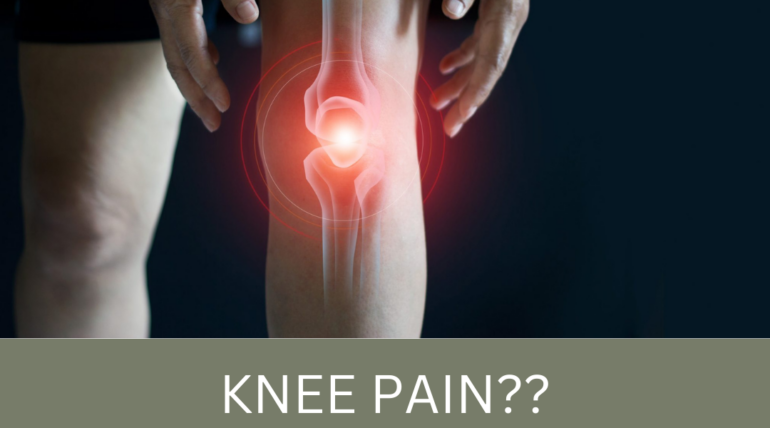
Relieving Knee Pain with Ayurveda

Knee pain is a common ailment that affects people of all ages and can significantly impact one’s quality of life. Whether it’s due to an injury, arthritis, or overuse, the discomfort and limitation in mobility can be frustrating. While conventional treatments like pain relievers and surgery are available, Ayurveda, the ancient Indian system of medicine, offers a holistic approach to managing and treating knee pain. In this blog, we will explore the causes of knee pain, Ayurvedic principles behind it, and natural treatments to find lasting relief.

Understanding Knee Pain in Ayurveda:

In Ayurveda, knee pain is often attributed to an imbalance in the Vata dosha, which represents the elements of air and ether. When Vata is aggravated, it can cause dryness, stiffness, and pain in the joints. However, other doshas can also play a role, especially in cases where inflammation is present, such as in rheumatoid arthritis.

Common Causes of Knee Pain:

  1. Osteoarthritis: This is the most common form of arthritis and occurs when the protective cartilage that cushions the ends of the bones wears down over time.
  2. Rheumatoid Arthritis: An autoimmune disorder where the body’s immune system attacks the synovial (lining of the membranes that surround the joints), causing pain and inflammation.
  3. Injuries: Knee injuries, such as ligament tears (ACL or MCL) or meniscus tears, can lead to chronic knee pain.
  4. Overuse: Repetitive strain on the knee joint, often seen in athletes and individuals with physically demanding jobs, can result in pain and discomfort.

Ayurvedic Treatments for Knee Pain:

Ayurveda emphasizes on treating the root cause, so first (@ Ayurvidhi Clinic) we diagnose according to Ayurvedic way by taking detailed case history. As per it by making final Diagnosis we start treatment as per dosha and the disease.

  1. Diet and Nutrition: Ayurveda emphasizes the importance of a balanced diet to maintain healthy joints. Foods rich in anti-inflammatory properties, such as ginger, turmeric, and garlic, can help reduce knee pain. Ghee (clarified butter) is also beneficial for lubricating the joints.
  2. Herbal Remedies: Ayurvedic herbs like Ashwagandha, Dashamool, Guggul are known for their anti-inflammatory and pain-relieving properties. They can be consumed in various forms, including capsules, tablets or as part of Ayurvedic formulations.
  3. Massage and Other Therapy: Abhyanga, (the practice of self-massage with warm herbal oils) can alleviate knee pain. Mahanarayan oil, which contains a blend of herbs, is commonly used for joint pain relief. Few other treatments like Pottali Massage, Janu Basti (putting oil on the knee for specific timing) helps to relieve the pain also helps in painless movement of the joint.
  4. Basti: A course of basti helps to elevate the pain of knee by providing the nourishment and keeping the Vaata doshas in check which is a major cause for Knee pain.

Treatment and medicine mentioned above are only for the purpose of information please consult to your Ayurveda Doctor before consuming any ayurvedic medicine.

At Ayurvidhi Clinic (Ayurveda Panchakarma Treatment Centre) we provide best ayurvedic & panchakarma treatment for knee pain and other joint pain problem.

Read More

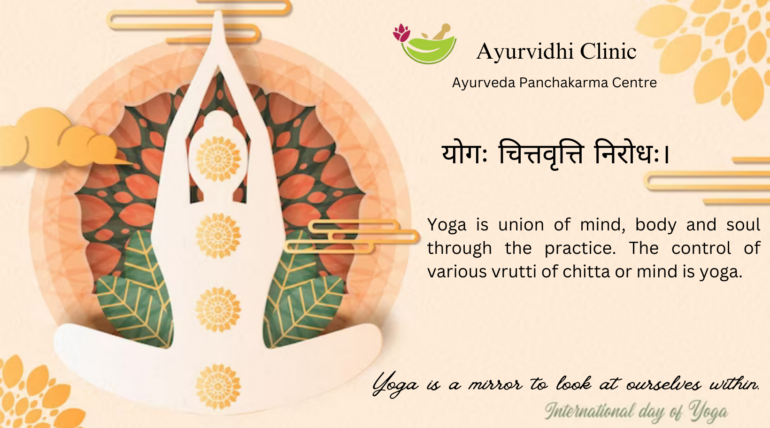
11 Yoga-asana you should start this International Yoga Day!!!

 Yoga is a word derived from the Sanskrit word “yuj” which means to connect. It helps to maintain the connection between mind, body & soul.  Nowadays yoga is popularised for maintaining health and body posture.

Let’s find some easy yoga-asana that you can do easily at home to maintain your health:

1. Tadasana (ताडासन):

This is a standing asana done standing straight and raising hands above.

Benefits: Helps to develop steadiness in the body. Releases stress on arms, legs, and back muscles.

2. Paad-angushthasana (पाद-अंगुष्ठ-आसन): This asana is one of the basic. In simple terms touching your own toes. It can be done while standing or sitting on the ground.

Benefits: Beneficial for spine health. Also helps to relive the abdomen pain that occurs during menstruation

3. Vrukshasana (वृक्षासान): This is a tree similar position created by standing on one leg with other folded and relaxed on the thigh of other muscle.

Benefits: Helps to develop the balance, concentration.

4. Trikonasana (त्रिकोणासन): Triangle pose made by touching our feets with crossed leg with wide open apart.

Benefits: Helps to release the stress of spine by twisting of muscles attached to it. Muscles of hips are stretched which helps in people having sitting jobs.

5. Vajrasana (वज्रासन): Thunderbolt pose or diamonds pose. This is simple sitting pose by kneeling and sitting back on legs to take weight off your knees.

Benefits: It is beneficial to do this asana for few minutes after meal to improve digestion. Also helps to improve strength of muscles of thigh and calves.

6. Shashakasana (शशंकासन) : Rabbit pose done by first sitting in vajrasana and then bending forward and stretching the arms.

Benefits: Helps to releves the stress and tension. Improves gut health and helps in constipation.

7. Bhujangasana (भुजंगसन): Cobra pose done sleeping on your belly then lifting the upper body from hip with help of hands.

Benefits: Helps to relieve stress. Helps to stretched abdomen which improves gut health. Good to improve the respiratory system.

8. Padmasana (पद्मासन): Lotus Pose. It is a modified Indian sitting pose done by crossed leg and resting feet on either laps facing upwards.

Benefits: Ideal for meditation. Improves muscle strength of hip muscle and thigh muscle. This asana helps to upward the blood flow toward navels which helps to improve the digestion and gut health.

9. Ardhahalasana (अर्धहलासन): This is the asana done sleeping back on and lifting both legs from hips by making 90 degree angle in the leg and hip.

Benefits: Relieves muscle tension of calf muscle and feet.

10. Pawanmuktasana (पवनमुक्तासन): This asana performed by one leg hold closed to the stomach while other is rotated in the air making an imaginary circle.

Benefits: Helps to release gases and flatulence. Helps in digestion.

11. Surya-namaskara (सूर्य नमस्कार): A complete yoga-asana actively involves all the muscle of body. It is set of  asana done in a uniformly active speed of motion.  It is good combination of asana and pranayama.

Benefits: Helps to stretch every muscle of body and release its tension. It helps to improves digestion and the gut health.

Precaution to be taken:

People suffering from arthritis, severe osteoporosis, old age patient are advised to by expert advise.

Read More