

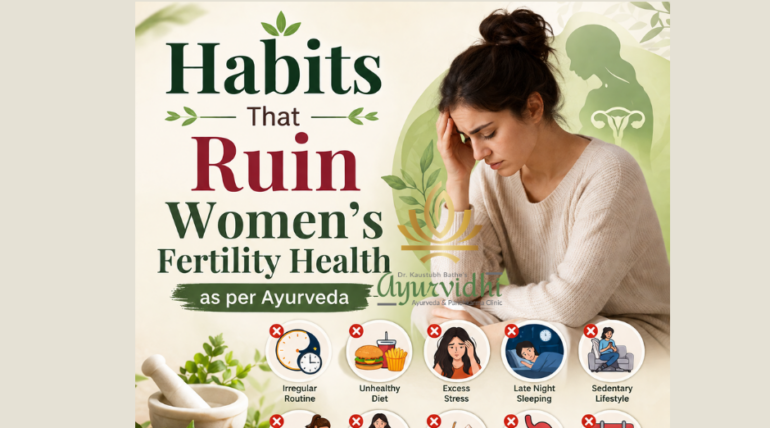
Illustration showing unhealthy lifestyle habits like stress, poor diet, late-night sleep, and irregular routine affecting women’s fertility health as per Ayurveda at Ayurvidhi Clinic.

Habits That Ruin Women’s Fertility (Ayurveda Guide to Fix Them Naturally)

Introduction

Many women today face difficulty in conceiving, and often the reasons are not just medical—but deeply rooted in daily lifestyle habits. Irregular routines, stress, improper diet, and hormonal imbalance gradually affect reproductive health.

In Ayurveda, fertility is governed by Artava Dhatu (female reproductive tissue) along with the proper functioning of Garbhashaya (uterus) and balanced doshas.

When daily habits disturb this balance, it can lead to conditions like irregular periods, poor ovulation, PCOS, and infertility.

Let’s understand the habits that ruin women’s fertility health as per Ayurveda.


Ayurvedic Understanding of Female Fertility

Healthy fertility depends on:

  • Balanced Vata, Pitta, and Kapha Dosha
  • Strong Agni (digestive fire)
  • Proper nourishment of Artava Dhatu
  • Clear Artavavaha Srotas (reproductive channels)

👉 Any imbalance in these factors can affect conception.


1. Irregular Daily Routine (Dinacharya Vighat)

An inconsistent lifestyle disturbs hormonal balance and reproductive cycles.

Examples:

  • Sleeping late
  • Skipping meals
  • Irregular work schedules

Effects:

  • Irregular periods
  • Ovulation issues
  • Hormonal imbalance

2. Poor Dietary Habits (Ahara Dosha)

Food directly nourishes reproductive tissues.

Harmful habits:

  • Junk food and processed foods
  • Excess spicy, sour, and fried foods
  • Crash dieting or skipping meals

Effects:

  • Weak Artava Dhatu
  • Formation of Ama (toxins)
  • PCOS and weight gain

3. Excess Stress & Emotional Disturbance

Mental health plays a key role in female fertility.

Effects of stress:

  • Disturbs Vaata Dosha
  • Affects ovulation
  • Causes irregular cycles

👉 Constant worry and anxiety can delay conception.


4. Late Night Sleeping (Ratri-jagaran)

Sleep is essential for hormonal regulation.

Effects:

  • Disturbed menstrual cycle
  • Reduced egg quality
  • Increased fatigue

5. Sedentary Lifestyle

Lack of movement leads to poor metabolism.

Effects:

  • Weight gain
  • PCOS and insulin resistance
  • Poor circulation to reproductive organs

6. Excessive Exercise or Overexertion

While moderate exercise is beneficial, overdoing it can harm fertility.

Effects:

  • Depletion of Artava Dhatu
  • Hormonal imbalance
  • Delayed or missed periods

7. Suppression of Natural Urges (Vegadharan)

Ignoring natural urges disturbs Vaata Dosha.

Examples:

  • Suppressing urination
  • Ignoring hunger or sleep

Effects:

  • Reproductive disorders
  • Painful periods

8. Excess Intake of Cold & Processed Foods

Cold and heavy foods increase Kapha and Aama.

Examples:

  • Ice creams
  • Cold drinks
  • Refrigerated food

Effects:

  • Blockage in reproductive channels
  • Poor ovulation

9. Untreated Digestive Issues (Mandaagni)

Weak digestion leads to improper nourishment of tissues.

Effects:

  • Formation of Aama
  • Poor egg quality
  • Hormonal imbalance

10. Ignoring Menstrual Health

Many women ignore symptoms like:

  • Painful periods
  • Irregular cycles
  • Heavy bleeding

👉 These are early signs of imbalance that can affect fertility if untreated.@


How to Protect & Improve Fertility Naturally (Ayurveda Tips)

✔ Follow a proper daily routine (Dinaacharya)
✔ Eat fresh, warm, and nourishing food
✔ Manage stress through Yoga & meditation
✔ Maintain healthy body weight
✔ Get adequate sleep

Recommended Panchakarma Therapies:

  • Vamana–  Removes excessive Aama & toxic Kapha, proliferate the rasa dhatu, balances the Shukra Dhatu
  • Basti – Balances Vaata and improves reproductive health
  • Virechana – Detoxifies Pitta and supports hormonal balance

Conclusion

Women’s fertility health is deeply connected to daily habits and internal balance. By avoiding these harmful practices and adopting Ayurvedic principles, one can naturally support Artavaha Dhatu, hormonal balance, and reproductive health.


Gentle Disclaimer

Ayurvedic treatment varies from person to person. Results depend on body constitution, lifestyle, and consistency. Always consult a qualified Ayurvedic doctor for proper guidance.


Take the First Step Towards Better Fertility

Facing issues like irregular periods or difficulty conceiving?

👉 Consult Ayurvidhi Clinic for personalized Ayurvedic fertility care and Panchakarma therapies.@https://ayurvidhiclinic.com/contact-us/

Read More
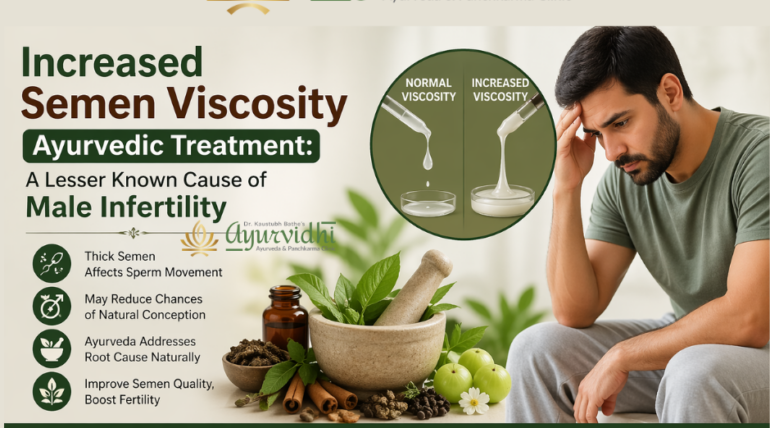
Illustration showing increased semen viscosity compared to normal viscosity with a stressed male and Ayurvedic herbs, highlighting Ayurvedic treatment for male infertility at Ayurvidhi Clinic.

Increased Semen Viscosity : A Lesser Known Cause of Male Infertility

Increased Semen Viscosity Ayurvedic Treatment: A Lesser Known Cause of Male Infertility

Introduction

Many couples trying to conceive often focus only on sperm count and motility. However, there is another important yet often overlooked factor—increased semen viscosity, which can silently affect male fertility.

In simple terms, when semen becomes too thick or sticky, it can prevent proper movement of sperm, making natural conception difficult. Many patients are unaware of this condition until a semen analysis is done.

Struggling with Increased Semen Viscosity or Male Infertility?
Don’t ignore this lesser-known cause of fertility issues. At Ayurvidhi Clinic, we offer personalized Ayurvedic treatment focused on improving semen quality, sperm motility, and overall reproductive health—naturally and effectively.

👉 Book your consultation today and take the first step towards healthy fertility.@https://ayurvidhiclinic.com/contact-us/

From an Ayurvedic perspective, Increased Semen Viscosity Ayurvedic Treatment focuses on correcting internal imbalances, improving fluidity of Shukra (reproductive tissue), and clearing blockages in the body’s channels.


Ayurvedic Understanding of Increased Semen Viscosity

In Ayurveda, semen is referred to as Shukra Dhatu, which should ideally be Snigdha (unctuous), Drava (fluid), and clear in nature.

When semen becomes excessively thick (Ati Ghana), it indicates imbalance in doshas and improper dhatu formation.

Dosha Involvement

  • Kapha Dosha – Causes heaviness, stickiness, and thickness
  • Vata Dosha – Affects proper movement and ejaculation
  • Pitta Dosha – May cause inflammation or heat affecting quality

👉 Increased viscosity is mainly a Kapha-dominant disorder with Vata involvement.

Trying to conceive but not getting results?
Increased semen viscosity could be the hidden reason. With the right Ayurvedic approach, this condition can be managed naturally.

🌿 Consult our expert today and start your fertility healing journey.@https://ayurvidhiclinic.com/contact-us/

Role of Agni & Ama

  • Agni (digestive fire): When weak, it leads to improper digestion and tissue formation
  • Ama (toxins): Sticky metabolic waste that blocks channels (Srotas)

👉 Accumulated Ama in Shukravaha Srotas (reproductive channels) leads to thick, sticky semen and reduced sperm mobility.


Common Causes According to Ayurveda

1. Dietary Causes (Ahara)

  • Excess dairy in improper combinations
  • Oily, heavy, and fried foods
  • Junk and processed foods
  • Excess sweets and cold foods

👉 These increase Kapha and Ama, leading to thick semen.


2. Lifestyle Causes (Vihara)

  • Sedentary lifestyle (lack of exercise)
  • Sleeping during the day (Divaswapna)
  • Late-night habits
  • Lack of physical activity

3. Mental & Emotional Factors

  • Chronic stress (Chinta)
  • Mental fatigue
  • Irregular routine

👉 These disturb Vata, affecting proper ejaculation and sperm movement.


Symptoms Explained in Simple Language

Many patients do not notice symptoms directly, but some indicators include:

  • Semen appearing thick, sticky, or clumpy
  • Delay in liquefaction after ejaculation
  • Difficulty in conception despite normal sperm count
  • Heaviness or sluggishness in body
  • Reduced sperm motility in reports

Ayurvedic Line of Treatment

The goal of treatment is to improve semen quality, reduce viscosity, and restore natural balance.


1. Shodhana Chikitsa (Detoxification Therapy)

If Ama and Kapha accumulation are significant, detoxification is recommended.

Benefits:

  • Clears blocked channels (Srotas)
  • Improves metabolism and fluid balance
  • Enhances tissue quality

2. Shamana Chikitsa (Balancing Therapy)

Post detox, treatment focuses on:

  • Balancing Kapha and Vata
  • Improving Shukra Dhatu quality
  • Enhancing sperm motility and fluidity

Role of Panchakarma in Increased Semen Viscosity

Panchakarma plays a crucial role in correcting this condition.

1. Virechana (Purgation Therapy)

  • Eliminates excess Pitta and Ama
  • Improves metabolic processes

2. Basti (Medicated Enema)

  • Best therapy for Vata imbalance
  • Improves reproductive channel function

    👉 Panchakarma should always be planned as per individual condition.@https://ayurvidhiclinic.com/panchakarma/


    Diet & Lifestyle Advice (Pathya-Apathya)

    Pathya (Recommended)

    Diet:
    • Light, warm, easily digestible food
    • Barley, millets, green vegetables
    • Moderate use of ghee
    • Warm water or herbal drinks
    Lifestyle:
    • Regular exercise
    • Yoga & Pranayama
    • Early sleeping and waking
    • Active daily routine

    Apathya (To Avoid)

    • Excess dairy (especially at night)
    • Cold drinks and refrigerated foods
    • Heavy, oily, and fried food
    • Daytime sleeping
    • Lack of physical activity

    Expected Results & Healing Timeline

    Ayurvedic healing is gradual and root-cause based.

    • Improvement in digestion and energy: 2–4 weeks
    • Reduction in Kapha and Ama: 1–2 months
    • Improvement in semen quality and viscosity: 2–4 months

    👉 Results vary depending on Prakriti (body type), lifestyle, and consistency.


    Why Ayurvedic Treatment is Different

    1. Holistic Approach

    Ayurveda treats the root cause—digestion, metabolism, and lifestyle—not just semen parameters.

    2. Personalized Treatment

    Each patient is treated based on Prakriti and Dosha imbalance.

    3. Focus on Long-Term Results

    Instead of temporary improvement, Ayurveda aims for sustainable reproductive health.


    When to Consult an Ayurvedic Doctor

    You should consider consultation if:

    • Facing difficulty in conception despite normal reports
    • Diagnosed with increased semen viscosity
    • Experiencing thick or delayed liquefaction of semen
    • Have sedentary lifestyle with digestive issues

    Conclusion

    Increased Semen Viscosity Ayurvedic Treatment offers a natural and holistic way to improve male fertility by addressing the root cause.

    With proper diet, lifestyle correction, and Panchakarma therapies, semen quality and reproductive health can improve gradually and safely.

    Get expert Ayurvedic treatment for male infertility at Ayurvidhi Clinic. Book your appointment now!@https://ayurvidhiclinic.com/contact-us/

    Read More