

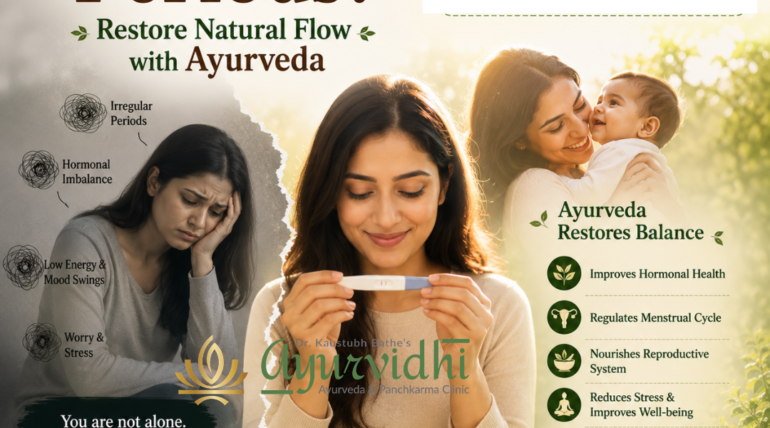
Scanty Periods? Restore Natural Flow with Ayurveda
Many women quietly experience scanty menses (low menstrual flow) but often ignore it thinking,
“Periods are coming, so everything must be normal.”
However, when menstrual flow is consistently low, it may indicate a deeper imbalance in the body—especially when you are planning pregnancy.
From an Ayurvedic perspective, menstruation (Artava) reflects the health of the reproductive system and overall body balance. Scanty flow is not just a symptom—it is a signal that the body needs attention.
Ayurvedic Understanding of Scanty Menses
In Ayurveda, scanty menstruation can be correlated with:
- Artava Kshaya (reduced menstrual flow)
- Vata-Pitta imbalance
- Improper nourishment of reproductive tissues (Artava Dhatu)
For healthy menstruation, Ayurveda emphasizes:
- Balanced Doshas
- Proper tissue nourishment
- Clear reproductive channels (Artavavaha Srotas)
Dosha Involvement
Vata Dosha (especially Apana Vata)
- Governs menstrual flow and downward movement
- When aggravated → reduced or irregular flow
Pitta Dosha
- Controls blood and hormonal functions
- Imbalance → poor endometrial development
Kapha Dosha
- Responsible for nourishment
- Deficiency → weak tissue formation
👉 Most commonly:
Vata imbalance + Poor nourishment = Scanty menses
Role of Agni & Ama
- Weak digestion (Mandagni) → improper tissue formation
- Accumulation of toxins (Ama) → blockage in reproductive channels
👉 Leads to:
- Thin endometrial lining
- Hormonal imbalance
- Reduced menstrual flow
Common Causes According to Ayurveda
🍽 Dietary Factors
- Skipping meals or crash dieting
- Excess junk and processed food
- Low intake of healthy fats (like ghee)
🌙 Lifestyle Factors
- Late-night sleeping (Ratri-jagaran)
- Excessive exercise or weight loss
- Irregular routine
🧠 Mental / Stress Factors
- Chronic stress
- Anxiety or emotional suppression
- Work pressure
👉 In clinical practice, stress is one of the most common hidden causes.
🩺 Symptoms Explained in Simple Language
Women with scanty menses may notice:
- Very light bleeding (1–2 days)
- Delayed cycles
- Brownish discharge instead of proper flow
- Lower abdominal discomfort
- Difficulty in conceiving (in some cases)
Ayurvedic Line of Treatment
Treatment is planned based on root cause and individual constitution.
1. Shodhana (Detoxification)
Recommended in selected cases.
Therapies:
- Virechana (Pitta detox) → Improves hormonal balance
- Basti (Vata balancing therapy) → Corrects Apana Vata
👉 Helps in clearing blockages and improving flow
2. Shamana (Balancing Treatment)
Includes:
- Herbal medicines
- Uterine tonics
- Rasayana (rejuvenation therapy)
👉 Focus:
- Nourishing Artava Dhatu
- Improving endometrial health
3. Role of Panchakarma
Panchakarma is very effective in chronic cases.
Key therapies:
- Uttar Basti → Direct action on uterus
- Basti therapy → Corrects Vata imbalance
- Abhyanga & Swedana → Improves circulation
👉 These therapies help in:
- Improving menstrual flow
- Enhancing uterine health
- Supporting fertility
Benefits for Reproductive Health
Ayurvedic treatment supports overall reproductive wellness:
- Improves menstrual regularity
- Enhances endometrial thickness
- Supports ovulation
- Improves fertility potential
- Balances hormones naturally
🥗 Diet & Lifestyle Advice (Pathya-Apathya)
✅ Pathya (Recommended)
- Warm, freshly cooked food
- Cow ghee and milk
- Sesame seeds (til)
- Dry fruits (almonds, dates)
- Iron-rich foods
❌ Apathya (Avoid)
- Cold drinks and ice cream
- Processed and packaged food
- Excess fasting or dieting
- Late-night habits
🌿 Lifestyle Recommendations
- Sleep before 10 PM
- Maintain regular routine
- Gentle yoga for pelvic health
- Stress management (pranayama, meditation)
Expected Results & Healing Timeline
Ayurveda works gradually by correcting root causes:
- Initial improvement: 4–6 weeks
- Better cycle pattern: 2–3 months
- Improved reproductive health: 3–6 months
👉 Results vary based on:
- Body constitution (Prakriti)
- Severity of condition
- Lifestyle compliance
Why Ayurvedic Treatment is Different
🌱 Holistic Approach
Treats the body as a whole—not just the uterus
🧬 Personalized Care
Each treatment is based on individual Dosha imbalance
⏳ Long-Term Benefits
Focuses on sustainable reproductive health and fertility
🩺 When to Consult an Ayurvedic Doctor
You should seek guidance if:
- Periods are consistently scanty
- Cycles are irregular
- Planning pregnancy
- History of hormonal imbalance
- Previous failed fertility treatments
Conclusion
Scanty menses is not just a minor issue—it is often an early sign of imbalance in the reproductive system.
With the right Ayurvedic approach, it is possible to improve menstrual health naturally and support fertility.
The key is timely intervention, proper diagnosis, and consistent treatment.
Call to Action
If you are experiencing low menstrual flow or planning for pregnancy,
you may consider consulting an Ayurvedic doctor for a personalized evaluation.
A balanced approach can help your body restore its natural rhythm.
Why To Choose Ayurvidhi Clinic:
Choosing Ayurvidhi Clinic means choosing authentic, root-cause-based Ayurvedic healing guided by classical principles and personalized care. With a strong focus on balancing Doshas, restoring natural health, and treating chronic conditions holistically, the clinic ensures long-term wellness rather than temporary relief. Under the expert guidance of Dr. Kaustubh Bathe, an experienced Ayurvedic physician known for his deep clinical knowledge, patient-centric approach, and successful results in complex conditions like infertility and lifestyle disorders, patients receive trustworthy, safe, and effective treatment tailored to their unique constitution.
Disclaimer
This article is for educational purposes only. Treatment should be taken under the supervision of a qualified Ayurvedic physician. Results vary from person to person.



Recent Comments