
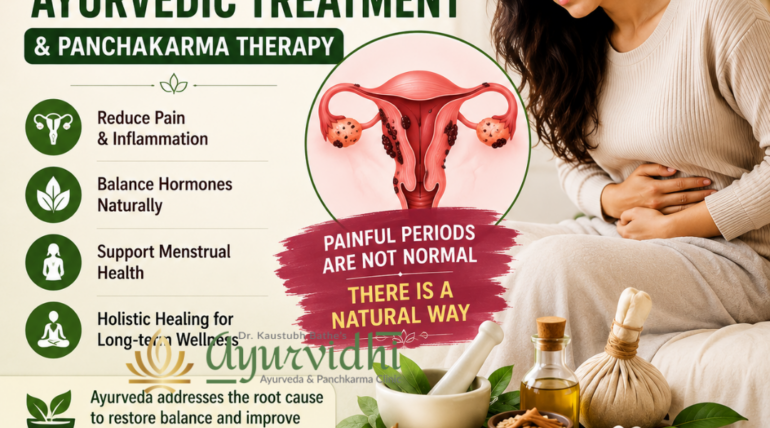
Woman experiencing severe abdominal pain due to endometriosis, with an illustration of the uterus and Ayurvedic herbs showing natural treatment and Panchakarma therapy for relief.

Endometriosis Beyond the Surface: The Ayurvedic Approach to Healing from Within

Healing from Within: Understanding Endometriosis Through Ayurveda and Panchakarma

If you are dealing with chronic pelvic pain, severe menstrual cramps, or deep fatigue, you know that endometriosis is much more than “just a bad period.” In the conventional medical world, it is often treated as a localized hormonal issue, frequently managed with birth control pills, hormone suppressors, or surgery.

While these options can offer temporary relief, they rarely address why the body is creating this tissue mismatch in the first place.

Ayurveda views endometriosis through a completely different lens. It sees the condition not as a localized disease, but as a systemic imbalance of the bodily energies (Doshas), tissues (Dhatus), and natural metabolic channels. By treating the root cause, Ayurveda provides a roadmap to lasting relief and reproductive balance.

The Ayurvedic Perspective: What is Endometriosis?

In Ayurveda, endometriosis is primarily classified as a Yonivyapad (uterine/vaginal disorder). It involves a complex interplay of all three doshas, though it begins with a disruption in Vata:

  • Vata (Specifically Apana Vayu): This sub-dosha controls the downward flow of elimination, including menstruation. When Apana Vayu is vitiated (disturbed), it causes retrograde menstruation—forcing menstrual blood and tissue upward and outward into the pelvic cavity instead of out of the body.

  • Pitta: The displacement of tissue triggers an inflammatory response. Pitta governs heat and inflammation, leading to burning pain, heavy bleeding, and tenderness.

  • Kapha: Once the endometrial tissue settles in places it shouldn’t be (like the ovaries, fallopian tubes, or bowels), Kapha takes over. Kapha is responsible for growth, stagnation, and the formation of cysts, adhesions, or scar tissue.

Therefore, holistic management requires calming Vata’s erratic movement, clearing Pitta’s heat, and breaking down Kapha’s stagnations.

The Core of Treatment: Panchakarma Cleansing

When tissue has already formed outside the uterus, standard herbal supplements aren’t always enough. The body needs a deep reset. This is where Panchakarma—Ayurveda’s five-fold cellular detoxification process—becomes essential.

Because endometriosis involves misplaced tissue and deep-seated toxins (Ama), a specialized, under-the-guidance Panchakarma protocol works to purge these impurities.

1.Snehana & Swedana (Preparation):Days 1–7.

Before toxins can be eliminated, they must be loosened. You will ingest medicated ghritas (herbalized clarified butter) daily to lubricate internal channels, followed by localized herbal steam therapies to open the sweat glands and move toxins toward the digestive tract.

2. Vamana (Therapeutic Emesis): Typically Day 8

To address the heavy Kapha and inflammatory component of endometriosis, a controlled herbal emesis is administered. This clears the liver and Aamaashaya, flushing out excess Kapha and impurities from upper tract.

2.Virechana (Therapeutic Purgation):Typically Day 8.

To address the heavy Pitta and inflammatory component of endometriosis, a controlled herbal purgation is administered. This clears the liver and small intestines, flushing out excess heat and blood impurities.

3.Basti (Medicated Enemas):Days 9–15.

This is the most critical step for endometriosis. Because the colon is the primary seat of Vata, specialized oil (Anuvasana) and herbal decoction (Niruha) enemas are given alternately. Basti directly recalibrates Apana Vayu, correcting the upward, reverse flow of menstrual energy and significantly reducing pelvic pain.

4.Uttara Basti (Intrauterine Therapy):Post-Menstrual Stage.

In specific cases, a highly specialized procedure is performed where sterile, medicated oils are gently introduced directly into the uterine cavity. This acts locally to soften adhesions, nourish the endometrium, and restore reproductive health.

Essential Ayurvedic Herbs for Daily Support

Outside of the detox clinic, daily herbal formulations help maintain the balance achieved during Panchakarma.

Herb Primary Action Why it Helps Endometriosis
Shatavari (Asparagus racemosus) Phytoestrogenic & Nourishing Regulates the menstrual cycle, supports fertility, and cools Pitta-driven inflammation.
Ashoka (Saraca asoca) Uterine Tonic Literally meaning “without sorrow,” it reduces heavy bleeding, tones uterine muscles, and eases cramping.
 Guggulu Anti-inflammatory & Scavenging A classic formulation used to break down growths, fibroids, cysts, and displaced endometrial tissue.
Turmeric & Aloe Vera Detoxifying & Soothing Turmeric acts as a natural cox-2 inhibitor (reducing pain pathways), while Aloe Vera juice (Kumari) regulates flow and cleanses the liver.

Simple Anti-Vata Dietary Shifts

To stop Vata from aggravating your pelvis, your daily diet should shift away from cold, dry, and raw foods.

  • Favor: Warm, cooked, easily digestible meals. Think kitchari, stews, soups, and warm spiced milks. Use healthy fats like Ghee, which lubricates the internal channels and calms Vata.

  • Avoid: Ice water, raw salads, refined sugar, and caffeine—all of which constrict the blood vessels and aggravate the nervous system (Majja Dhatu), intensifying pain during your cycle.

A Gentle Reminder

Ayurveda does not promise an overnight miracle. It is a slow, deeply respectful rebuilding of your body’s ecosystem. By regulating the movement of Vata, clearing systemic inflammation, and supporting your liver’s natural ability to process excess estrogen, you can shift your body from a state of painful defense to long-term harmony.

Note: Because endometriosis is a complex condition, Panchakarma and internal herb regimens should always be customized by a certified Ayurvedic Doctor (BAMS) to match your unique Prakriti (constitution).

Read More
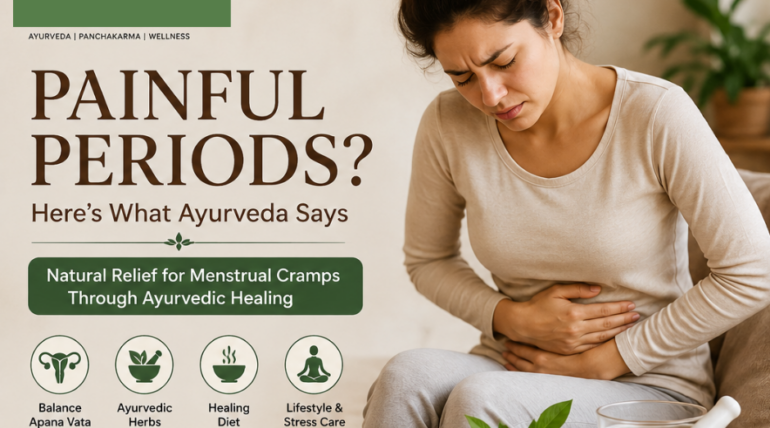
Woman experiencing painful menstrual cramps holding her abdomen, with Ayurvedic herbs and tea shown as natural remedies for period pain relief.

Painful Periods? An Ayurvedic Perspective on Menstrual Cramps and Natural Relief

Painful Periods? An Ayurvedic Perspective on Menstrual Cramps and Natural Relief

“Doctor, is it normal to have this much pain during periods?”

This is a question many women ask—but often only after silently enduring discomfort for years.

For some, menstruation passes with mild uneasiness. For others, it brings intense abdominal cramps, backache, bloating, fatigue, mood changes, and even disruption of daily activities.

While menstrual pain is common, it should not be ignored when it becomes severe or recurring.

From an Ayurvedic perspective, painful periods are not just a monthly problem—they are a signal that the body’s internal balance needs attention.


Understanding Menstrual Pain: Beyond Just Cramps

Medically, menstrual pain is known as dysmenorrhea. It occurs due to uterine contractions triggered by prostaglandins, which help shed the uterine lining.

Higher levels of these chemicals can lead to:

  • Stronger uterine contractions
  • Increased abdominal pain
  • Nausea and fatigue
  • Digestive disturbances

However, Ayurveda looks deeper than just the symptoms.

It asks: Why is the body reacting this way?


Ayurvedic View: Role of Apana Vata

In Ayurveda, a healthy menstrual cycle should be:

  • Regular
  • Smooth
  • Relatively pain-free

Painful menstruation is often linked to the imbalance of Apana Vata, a subtype of Vata Dosha responsible for downward movement in the body.

Apana Vata governs:

  • Menstrual flow
  • Ovulation
  • Elimination
  • Reproductive functions

When Apana Vata becomes disturbed, it can lead to:

  • Cramping pain
  • Lower back discomfort
  • Bloating
  • Irregular cycles
  • Mood swings

What Causes Vaata Imbalance?

Modern lifestyle habits play a major role in aggravating Vaata:

  • Irregular eating patterns
  • Excessive stress
  • Late nights and poor sleep
  • Skipping meals or fasting
  • Cold, processed, or junk food
  • Overexertion

These factors disturb the natural rhythm of the body, directly affecting menstrual health.


Why Pain Varies from Woman to Woman

A common concern is:

“Why do I have more pain than others?”

The answer lies in individual constitution (Prakriti), lifestyle, and underlying conditions.

In some cases, painful periods may be associated with:

  • PCOS
  • Endometriosis
  • Fibroids
  • Hormonal imbalance

In others, the cause may simply be poor digestion, stress, or Vata aggravation.

This is why Ayurveda always emphasizes personalized diagnosis rather than a one-size-fits-all approach.


Ayurvedic Approach to Managing Menstrual Pain

Instead of only suppressing pain, Ayurveda focuses on correcting the root imbalance.

1. Diet for Menstrual Comfort

Food plays a crucial role in balancing Vaata.

Recommended during menstruation:

  • Warm, freshly cooked meals
  • Light and easy-to-digest foods
  • Soups and khichdi
  • Ghee in moderation
  • Warm herbal drinks

Avoid:

  • Cold beverages
  • Packaged and processed foods
  • Excess caffeine
  • Irregular eating

2. Importance of Rest

Unlike modern expectations to “push through,” Ayurveda recommends rest during menstruation.

Helpful practices include:

  • Adequate sleep
  • Reduced physical exertion
  • Avoiding excessive travel or stress
  • Allowing the body to recover

Rest supports proper functioning of Apana Vata.


Ayurvedic Herbs for Menstrual Wellness

Certain herbs have been traditionally used to support menstrual health:

  • Ashoka – Supports uterine health
  • Shatavari – Nourishes reproductive tissues
  • Ginger – Helps reduce pain and improve circulation
  • Turmeric – Supports inflammatory balance
  • Fennel & Cinnamon – Aid digestion and reduce bloating

Note: Herbal medicines should always be taken under professional guidance.


Simple Home Remedies for Period Pain

These gentle remedies may provide relief:

  • Ginger tea with a pinch of turmeric
  • Warm cumin water for bloating
  • Sesame seeds for Vata balance
  • Turmeric milk at night for relaxation

Lifestyle Practices That Help

✔ Abhyanga (Oil Massage)

Gentle massage with warm sesame oil helps relax muscles and calm the nervous system.

✔ Heat Therapy

Applying a hot water bag on the lower abdomen provides quick relief from cramps.

✔ Gentle Yoga

Helpful poses:

  • Child’s Pose
  • Butterfly Pose
  • Cat-Cow Stretch

Focus should be on relaxation—not intensity.

✔ Stress Management

Mental health directly affects menstrual health.

Practices like:

  • Meditation
  • Deep breathing
  • Yoga Nidra

can significantly reduce symptoms.


When Should You Seek Medical Help?

Menstrual pain should not be ignored if you experience:

  • Severe pain every cycle
  • Heavy bleeding
  • Increasing pain over time
  • Irregular periods
  • Pain during intercourse
  • Difficulty conceiving

These may indicate underlying conditions that require proper evaluation.


Panchakarma for Menstrual Health

In selected cases, Ayurvedic detox therapies may be recommended:

  • Virechana – for Pitta balance
  • Basti therapy – highly effective for Vata disorders
  • Specialized gynecological Ayurvedic protocols

These treatments are always personalized based on individual assessment.


A Holistic Approach to Menstrual Wellness

Ayurveda does not treat periods in isolation.

It focuses on improving:

  • Digestion (Agni)
  • Hormonal balance
  • Sleep quality
  • Mental well-being
  • Lifestyle habits

The aim is not just pain relief—but long-term menstrual health.


Personalized Care at Ayurvidhi Clinic, Pune

At Ayurvidhi Clinic, we believe that every woman’s body is unique.

We offer individualized Ayurvedic care for:

  • Painful periods
  • PCOS
  • Irregular cycles
  • Hormonal imbalance
  • Fertility concerns

Our approach includes:

  • Detailed Ayurvedic consultation
  • Customized medicines
  • Diet and lifestyle guidance
  • Stress management
  • Panchakarma therapies when needed

By addressing the root cause, we aim to help you experience healthier, more comfortable cycles.


Conclusion

Painful periods are common—but they are not something you have to silently tolerate.

Your body is communicating with you.

With the right Ayurvedic approach, proper guidance, and consistent care, it is possible to reduce discomfort and restore balance naturally.


FAQs

1. Can Ayurveda help with period pain?
Yes, Ayurveda focuses on balancing underlying doshas and improving overall reproductive health.

2. Is it normal to have pain during periods?
Mild discomfort can be normal, but severe or recurring pain needs evaluation.

3. Which herb is best for menstrual cramps?
Ashoka, Shatavari, and Ginger are commonly used—but treatment should be individualized.

4. Can stress worsen period pain?
Yes, stress aggravates Vata and can increase menstrual discomfort.

5. When should I consult an Ayurvedic doctor?
If pain affects your daily life, is increasing, or associated with other symptoms.

Read More