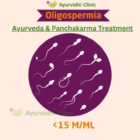

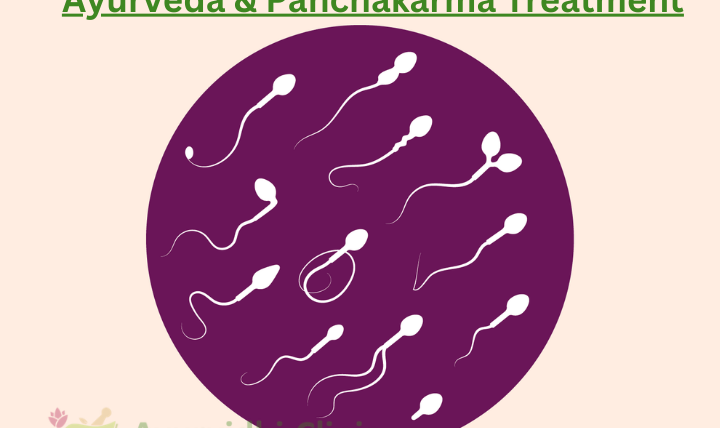
Oligospermia (low sperm count below 15 million/ml) illustrated with sperm cells — Ayurvedic & Panchakarma treatment for male infertility at Ayurvidhi Clinic

“Boost Sperm Count Naturally: Ayurvedic Secrets to Overcoming Oligospermia”

Difficulty in conceiving can be emotionally challenging for any couple, especially when male factors such as low sperm count (oligospermia) are involved. Many men feel anxious, confused, or even hesitant to discuss the issue openly. Modern lifestyle stress, poor diet, pollution, and irregular routines are increasingly affecting male reproductive health.

Oligospermia Ayurvedic Treatment offers a holistic, natural, and safe approach that focuses not only on increasing sperm count but also on improving overall reproductive vitality, hormonal balance, and mental well-being.

In Ayurveda, low sperm count is primarily related to weakness or depletion of Shukra Dhatu (reproductive tissue), often associated with imbalances in Doshas, impaired digestion, toxin accumulation, and lifestyle disturbances. The goal is not a quick fix, but sustainable restoration of reproductive strength.

👉 If you are planning for conception and want a natural, root-cause-based approach, consulting an experienced Ayurvedic physician can be a wise first step.


Ayurvedic Understanding of Oligospermia

In Ayurvedic classics, semen quality and fertility are governed by Shukra Dhatu, the most refined tissue formed after proper nourishment of all previous tissues.

Dosha Involvement

  • Vata Dosha — causes depletion, dryness, low volume, poor motility

  • Pitta Dosha — leads to heat, inflammation, reduced vitality, abnormal morphology

  • Kapha Dosha — may cause sluggishness, obstruction, and reduced functional quality

Most cases involve Vata aggravation with Pitta imbalance, especially due to stress, excessive heat exposure, or sexual overexertion.

Role of Agni & Ama

  • Agni (digestive fire) — Responsible for proper tissue nourishment

  • Ama (metabolic toxins) — Blocks channels and weakens tissue formation

When digestion is weak, nutrition does not transform properly into healthy Shukra Dhatu. Instead, toxins accumulate and reproductive strength declines.


Common Causes According to Ayurveda

Dietary Factors

  • Excessively spicy, oily, junk, or processed food

  • Irregular meal timings

  • Nutritional deficiencies

  • Excess alcohol or smoking

  • Low intake of nourishing foods

Lifestyle Factors

  • Late nights and poor sleep

  • Sedentary habits

  • Excessive physical strain

  • Prolonged sitting (common in IT jobs)

  • Exposure to heat (sauna, hot baths, tight clothing)

Mental & Stress Factors

  • Chronic stress and anxiety

  • Performance pressure

  • Emotional exhaustion

  • Overthinking and mental fatigue

👉 Ayurveda recognizes that mental health strongly influences reproductive health.


Symptoms Explained in Simple Language

Oligospermia itself may not produce obvious symptoms, but associated signs can include:

  • Low sperm count on semen analysis

  • Reduced semen volume

  • Decreased libido

  • Fatigue and weakness

  • Premature ejaculation or erectile issues

  • Mental stress related to infertility

If conception has not occurred despite regular attempts for 6–12 months, evaluation is recommended.

👉 Early consultation improves outcomes significantly.


Ayurvedic Line of Treatment

Oligospermia Ayurvedic Treatment focuses on restoring tissue quality, improving hormonal balance, enhancing vitality, and clearing obstructions.

1. Shodhana (Detoxification)

If toxins and Dosha imbalance are significant, purification therapies may be advised.

Possible procedures include:

  • Vamana (therapeutic emesis) — removes excess Kapha and toxins & help to nourishes Sperm health

  • Virechana (therapeutic purgation) — removes excess Pitta and toxins
  • Basti (medicated enema) — highly beneficial for Vata-related reproductive disorders

These therapies help create a receptive environment for tissue regeneration.


2. Shamana (Balancing Therapies)

After detoxification, nourishing treatments are used to strengthen Shukra Dhatu.

Classical Ayurvedic medicines and formulations may include:

  • Vajikarana (aphrodisiac and fertility-enhancing therapy)

  • Rasayana (rejuvenation therapy)

  • Herbal combinations tailored to individual constitution

The aim is to improve:

  • Sperm count

  • Motility

  • Quality

  • Reproductive energy

  • Overall vitality

👉 Self-medication is not advisable. Proper diagnosis ensures effective results.


Role of Panchakarma in Oligospermia

Panchakarma therapies play a crucial role in moderate to severe cases.

Beneficial procedures may include:

  • Basti therapies for reproductive strengthening

  • Abhyanga (medicated oil massage) for stress reduction

  • Swedana (therapeutic sweating) for detoxification

  • Shirodhara for mental calmness and hormonal balance

These therapies help improve:

  • Circulation to reproductive organs

  • Hormonal regulation

  • Nervous system stability

  • Tissue nourishment


Diet & Lifestyle Advice (Pathya–Apathya)

Recommended Foods (Pathya)

  • Milk and ghee (if digestible)

  • Almonds, walnuts, dates

  • Fresh fruits

  • Whole grains

  • Moong dal

  • Pumpkin seeds and sesame seeds

  • Nourishing soups

Foods to Avoid (Apathya)

  • Excess spicy and fried food

  • Packaged and junk food

  • Alcohol and smoking

  • Excess caffeine

  • Very sour and fermented foods

Lifestyle Recommendations

  • Regular sleep (before 11 PM)

  • Moderate exercise

  • Stress management practices

  • Avoid overheating of testicular region

  • Healthy sexual habits

👉 Even the best medicines cannot work fully without supportive lifestyle changes.


Expected Results & Healing Timeline

Ayurvedic treatment works gradually by rebuilding tissue strength.

Typical improvements may occur as follows:

  • 4–6 weeks — better energy and sleep

  • 2–3 months — improved semen parameters

  • 3–6 months — enhanced reproductive health

  • Long-term — sustained vitality

Results vary depending on:

  • Age

  • Cause of oligospermia

  • Duration of condition

  • Compliance with treatment

  • Individual constitution


Why Ayurvedic Treatment is Different

Holistic Approach

Instead of focusing only on sperm count, Ayurveda improves overall reproductive capacity.

Personalized Treatment

Each patient receives a plan based on:

  • Prakriti (body constitution)

  • Vikriti (current imbalance)

  • Lifestyle

  • Mental health

  • Digestive strength

Long-Term Relief Focus

The goal is not temporary improvement but sustainable fertility enhancement and general health.


When to Consult an Ayurvedic Doctor

Seek professional guidance if:

  • You are trying to conceive for over 6–12 months

  • Semen analysis shows low sperm count

  • You have associated sexual weakness

  • Stress or fatigue is affecting reproductive health

  • You want a natural alternative or supportive therapy

👉 Early intervention prevents further decline and improves success chances.


Conclusion

Oligospermia can be distressing, but it is not hopeless. With proper diagnosis, disciplined lifestyle, and individualized Ayurvedic care, many men experience significant improvement in reproductive health.

Oligospermia Ayurvedic Treatment aims to restore balance, rebuild vitality, and support natural conception safely and holistically — without harsh interventions.

Remember, fertility is a reflection of overall health. Strengthening the body and mind naturally often yields the most sustainable results.

If you or your partner are facing difficulty in conceiving due to low sperm count, do not delay seeking expert guidance.

🌿 A personalized Ayurvedic consultation can help identify the root cause and create a safe, natural treatment plan tailored to your body.

👉 Book an appointment with a qualified Ayurvedic physician to begin your journey toward improved reproductive health and confidence
Read More
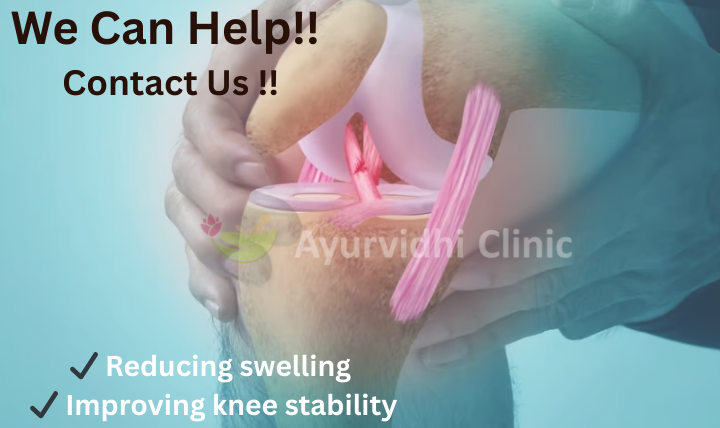
ACL tear knee injury illustration with highlighted ligament damage and Ayurvedic treatment benefits for pain relief and healing at Ayurvidhi Clinic.

ACL Tear Recovery the Ayurvedic Way!

Introduction:

When a Knee Injury Changes Your Daily Movement

An ACL tear can be physically painful and emotionally disturbing. Many patients describe the moment of injury clearly — a sudden twist while playing cricket, football, kabaddi, gym workout, or even slipping on stairs. After that comes swelling, instability, fear of walking properly, and uncertainty about the future.

In modern practice, ACL (Anterior Cruciate Ligament) injuries are often associated with surgical reconstruction. However, from an Ayurvedic perspective, ligament injury is understood through the lens of Vata aggravation, Asthi-Majja Dhatu involvement (bone and nerve tissue), impaired Agni (digestion), and obstruction of Srotas (body channels).

ACL Tear Ayurvedic Treatment does not claim to replace emergency surgical care where required. Instead, Ayurveda offers supportive and restorative management that focuses on reducing inflammation, improving stability, nourishing tissues, and enhancing long-term joint strength.

Let us understand this condition from a classical Ayurvedic viewpoint.


Ayurvedic Understanding of ACL Tear

In Ayurvedic texts such as Sushruta Samhita, trauma-related injuries are described under Bhagna (fractures and ligament injuries) and Snayu Vikara (ligament disorders).

🔹 Dosha Involvement

  • Vata Dosha (movement and nerve control) – primary aggravation in ligament injuries

  • Pitta Dosha (inflammation and heat) – responsible for swelling and pain in acute phase

  • Kapha Dosha – may contribute to stiffness during recovery stage

An ACL tear primarily reflects Vata vitiation affecting Snayu (ligaments).


🔹 Role of Agni and Ama

After injury:

  • Poor digestion due to stress or medication weakens Agni (digestive fire)

  • Improper metabolism leads to formation of Ama (toxic residue)

  • Ama may aggravate swelling and delay tissue healing

Therefore, improving digestion is an essential part of recovery.


🔹 Srotas (Body Channels) Involved

  • Asthi Vaha Srotas (bone channels)

  • Majja Vaha Srotas (nerve and marrow channels)

  • Mamsa Vaha Srotas (muscle channels)

Proper nourishment of these channels is necessary for ligament healing and joint stability.


Common Causes According to Ayurveda

While ACL tear is often due to trauma, Ayurveda looks at predisposing factors as well.

Physical Causes

  • Sudden twisting movements

  • Sports injuries

  • Weak musculature around knee

  • Improper warm-up before exercise

Dietary Causes

  • Poor nourishment leading to weak Asthi Dhatu

  • Excess dry, processed, or junk food

  • Low intake of strengthening foods

Lifestyle Factors

  • Sedentary lifestyle

  • Lack of regular joint strengthening exercises

  • Overexertion without adequate rest

Mental & Stress Factors

  • Chronic stress increasing Vaata

  • Fear and anxiety post-injury slowing recovery

Ayurveda recognizes that mental stress can delay tissue healing.


Symptoms Explained in Simple Language

Patients with ACL tear may experience:

  • Sudden knee pain after injury

  • Swelling around the knee

  • Feeling of instability or “knee giving way”

  • Difficulty walking or climbing stairs

  • Restricted knee movement

Severity varies depending on partial or complete tear.


Ayurvedic Line of Treatment for ACL Tear

Ayurvedic management depends on:

  • Stage of injury (acute or chronic)

  • Extent of ligament damage

  • Associated swelling or instability

  • Patient’s constitution (Prakriti)

Treatment is divided into phases.


🔹 1. Shodhana (Detoxification – When Indicated)

In chronic cases with Ama accumulation and stiffness:

  • Basti (medicated enema therapy)
    Considered best for Vaata disorders
    Helps nourish Asthi and Majja Dhatu

Shodhana is not advised in the immediate acute traumatic phase.


🔹 2. Shamana (Balancing & Supportive Therapies)

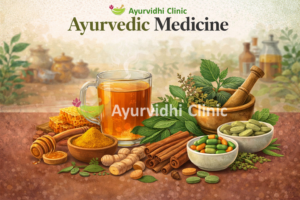
“Ayurvedic medicine with herbal tea, turmeric, honey, ginger, cinnamon, medicinal herbs, and tablets representing natural healing at Ayurvidhi Clinic.”
“Ayurvedic medicine focuses on holistic healing using natural herbs, medicinal teas, and time-tested formulations. At Ayurvidhi Clinic, we offer personalized Ayurvedic treatments to restore balance, boost immunity, and promote long-term wellness naturally.”

Internal medicines focus on:

  • Pacifying aggravated Vata

  • Supporting ligament healing

  • Reducing inflammation

  • Strengthening Asthi Dhatu

Classical formulations (as per indication):

  • Guggulu
  • Dashamoola preparations

  • Asthi-poshak formulations

Medicines are prescribed only after proper assessment.


Role of Panchakarma in ACL Tear Management

Panchakarma plays a major supportive role, especially in rehabilitation phase.

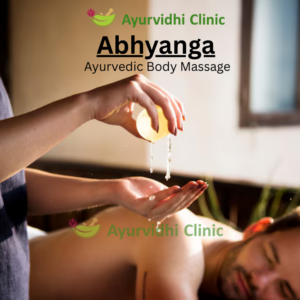
Abhyanga (Medicated Oil Massage)

Ayurvidhi Clinic image showing Abhyanga Ayurvedic body massage with warm herbal oil poured on the body, promoting relaxation, detoxification, and holistic wellness.
The image shows a therapist gently pouring warm herbal oil onto the body of a person during an Abhyanga Ayurvedic massage session. The client is lying comfortably, symbolizing relaxation and healing. The soft lighting and natural tones reflect calmness and rejuvenation. The text “Abhyanga – Ayurvedic Body Massage” with the Ayurvidhi Clinic logo highlights the therapeutic benefits of traditional oil massage for detoxification, stress relief, and holistic wellness.
  • Improves circulation

  • Reduces stiffness

  • Nourishes muscles and ligaments

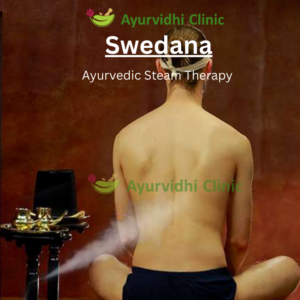
Swedana (Fomentation)

Ayurvidhi Clinic image showing Swedana Ayurvedic steam therapy, with herbal steam applied to the back for detoxification, pain relief, and dosha balance.
Swedana Ayurvedic Steam Therapy helps eliminate toxins, relieve stiffness, and improve circulation. At Ayurvidhi Clinic, this traditional therapy is used to support joint health, muscle relaxation, detoxification, and enhanced results of Panchakarma treatments.
  • Relieves tightness

  • Reduces swelling in subacute stage

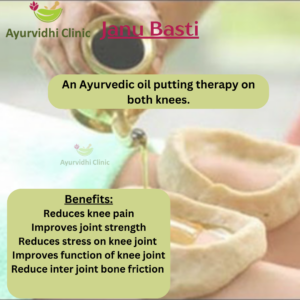
Janu Basti (Localized Oil Retention Therapy)

“Janu Basti Ayurvedic therapy with warm medicated oil retained over the knee joint using a dough ring for knee pain and osteoarthritis treatment at Ayurvidhi Clinic.”
“Janu Basti is a classical Panchakarma therapy where warm medicated oil is retained over the knee joint to reduce pain, stiffness, inflammation, and improve joint mobility in conditions like osteoarthritis and chronic knee pain.”
  • Warm medicated oil retained over knee joint

  • Improves ligament nourishment

  • Supports stability

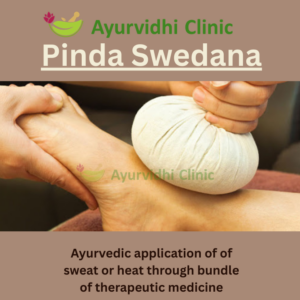
Pinda Sweda

“Pinda Swedana Ayurvedic therapy showing herbal bolus fomentation applied to the ankle joint for pain relief and muscle stiffness at Ayurvidhi Clinic.”
“Pinda Swedana is a classical Ayurvedic sudation therapy where warm herbal boluses are applied to relieve joint pain, muscle stiffness, inflammation, and improve circulation naturally.”
  • Helpful in chronic stiffness

  • Strengthens surrounding muscles

Panchakarma is customized based on recovery stage.


Diet & Lifestyle Advice (Pathya–Apathya)

✅ Pathya (Recommended)

  • Warm, nourishing food

  • Cow ghee in moderation

  • Milk (if suitable)

  • Sesame seeds

  • Moong dal and rice

  • Gentle physiotherapy under guidance

❌ Apathya (To Avoid)

  • Cold, dry foods

  • Excessive fasting

  • Sudden weight-bearing activity

  • Ignoring rest during acute phase

Balanced rest and gradual strengthening are essential.


Expected Results & Healing Timeline

Ligament healing is gradual.

  • Swelling reduction: few weeks

  • Improved stability: 6–12 weeks

  • Strength restoration: gradual and supervised

Recovery depends on:

  • Severity of tear

  • Age and general health

  • Compliance with therapy

  • Physiotherapy support

Ayurveda supports natural healing but does not promise instant repair.


Why ACL Tear Ayurvedic Treatment Is Different

  • Focuses on tissue nourishment

  • Strengthens surrounding muscles

  • Improves digestion and metabolism

  • Addresses stress-related Vaata aggravation

  • Personalized treatment approach

Ayurveda views injury recovery as a systemic healing process, not just local ligament repair.


When to Consult an Ayurvedic Doctor

  • After initial diagnosis of ACL tear

  • For supportive recovery post-surgery

  • In partial tears seeking conservative management

  • For chronic knee instability

  • If looking for holistic rehabilitation support

Emergency and surgical decisions should always be taken after orthopedic evaluation when required.


Conclusion: Supporting Natural Healing with Classical Wisdom

ACL injuries can be physically and mentally challenging. Ayurveda provides a structured, supportive, and holistic approach to improve recovery, strengthen ligaments, and enhance joint stability.

Through proper Dosha balance, digestive correction, Panchakarma therapies, and lifestyle guidance, many patients experience meaningful improvement in comfort and function.

Ayurvedic care works best when integrated responsibly with necessary medical evaluation.


Soft Call to Action

If you have been diagnosed with an ACL tear or are recovering from knee ligament injury, consult a qualified Ayurvedic physician for a personalized assessment. Early holistic care can support better long-term knee health.

Medical Disclaimer: Results vary depending on individual constitution, injury severity, and treatment adherence. Ayurveda supports recovery but does not replace emergency orthopedic care where indicated.

Read More