

“Nothing is majorly wrong, but I just don’t feel like myself anymore.”
Have you caught yourself saying this lately? It’s a quiet realization that hits many of us after weeks—or even months—of continuous stress.
You might be getting eight hours of sleep but still wake up feeling completely drained. Maybe your digestion feels off, your thoughts won’t stop racing at 2 AM, or you find yourself snapping at the smallest things. From the outside, everything looks fine. On the inside, you feel completely exhausted.
When we reach this point, quick fixes rarely help. This is where Ayurveda and stress management take a refreshingly different approach. Rather than viewing stress purely as a mind issue, Ayurveda sees it as a deep conversation between your brain, digestion, sleep habits, daily routine, and unique body type (Prakriti).
Managing stress naturally isn’t about drinking a herbal tea or booking a single spa massage. It’s about understanding why your system feels out of balance—and gently guiding it back home.
Important Note: Stress-related symptoms can arise from various medical or mental health conditions. Severe, persistent, or unexplained symptoms should always be evaluated by a healthcare professional. Ayurvedic care serves as a wonderfully supportive, holistic approach alongside standard medical care.
How Does Ayurveda Understand Stress?
Classical Ayurvedic texts don’t use the modern word “stress,” but they offer a profound understanding of the relationship between Sharira (the physical body) and Manas (the mind).
They don’t operate separately. What happens in your mind registers in your gut; what you put in your body affects your thoughts.
Consider what a typical, high-stress week looks like:
-
You stay up late finishing work or scrolling on your phone.
-
You wake up groggy and skip breakfast, or rush through a meal.
-
You drink three or four cups of tea or coffee to stay awake.
-
You sit at a desk all day, then stay up late again to “reclaim” your free time.
Eventually, the body registers this lifestyle, leading to symptoms such as:
-
Disturbed or light sleep
-
Irregular appetite and bloating
-
Headaches and physical neck/shoulder tension
-
Restlessness, irritability, and racing thoughts
-
Brain fog and difficulty focusing
Ayurveda doesn’t treat each of these symptoms as separate problems. It looks at the whole picture to see where the balance was lost.
The 3 Doshas and Stress: Why We All React Differently
Have you ever noticed how two people can face the exact same stressful deadline and react completely differently?
-
One person gets nervous, anxious, and can’t sleep.
-
Another gets frustrated, impatient, and hot-headed.
-
A third person shuts down, feels heavy, and wants to sleep all day.
Ayurveda explains these reactions through our primary energies, or Doshas: Vata, Pitta, and Kapha.
1. Vata-Type Stress (Anxiety & Restlessness)
When Vata is out of balance, stress shows up as instability.
-
Common signs: Racing thoughts, anxiety, trouble falling asleep, constipation, lightheadedness, and feeling mentally scattered.
-
Triggers: Irregular schedules, too much travel, excessive screen time, cold food, and skipping meals.
2. Pitta-Type Stress (Anger & Burnout)
When Pitta is aggravated, stress turns into heat and intensity.
-
Common signs: Irritability, perfectionism, skin breakouts, acid reflux, heartburn, and feeling quick to anger.
-
Triggers: Workaholism, excessive caffeine, spicy/fried food, intense competition, and skipping meals out of busyness.
3. Kapha-Type Stress (Lethargy & Withdrawal)
When Kapha is overwhelmed, stress causes stagnation.
-
Common signs: Low energy, feeling stuck or hopeless, sleeping excessively, comfort eating, and emotional withdrawal.
-
Triggers: Lack of physical movement, heavy or greasy foods, oversleeping, and staying indoors too long.
Understanding your dominant response helps customize your recovery. One size never fits all in Ayurveda.
The Hidden Link: Stress and Your Digestive Fire (Agni)
In Ayurveda, your digestive fire—known as Agni—is the foundation of health. When stress hits, digestion is usually the first system to falter.
When you eat while anxious, rushed, or upset, your digestive fire weakens. You might experience:
-
Bloating and gas
-
Acidity or indigestion
-
Irregular bowel movements
-
A heavy, lethargic feeling right after eating
Poor digestion leads to the accumulation of Aama (unmetabolized metabolic waste), which circulates through the body and mind, making you feel even more fatigued and mentally foggy. This is why you cannot truly resolve stress without fixing your diet and eating habits.
4 Practical Pillars of Ayurvedic Stress Management
Ayurveda doesn’t focus on quick fixes. Instead, it relies on sustainable, daily choices that build resilience over time.
1. Rebuild Your Daily Routine (Dinacharya)
Your body thrives on predictability. Establishing a steady daily rhythm calms an overactive nervous system.
-
Wake and sleep consistency: Try to go to bed and wake up within the same 30-minute window every day.
-
Fixed meal times: Eat your meals at predictable hours so your body knows when to expect nourishment.
-
Start small: Don’t overhaul your entire life overnight. Pick one small change—like sitting down calmly for breakfast—and stick with it for a week.
2. Nourish Your Gut and Digestive Fire
-
Eat warm, freshly prepared, whole foods over cold, raw, or packaged meals.
-
Avoid routinely skipping meals or eating while looking at work emails.
-
Cut back on late-night snacks and excessive caffeine, which overstimulate your nervous system.
-
Stay hydrated with warm water or gentle herbal teas (like ginger, cumin, or fennel).
3. Protect Your Sleep (Nidra)
In Ayurveda, Nidra is one of the three primary pillars of life. To prepare your mind for rest:
-
Put screens away at least 60 minutes before bed.
-
Keep your bedroom dim, quiet, and slightly cool.
-
Practice 5–10 minutes of gentle, slow breathing before closing your eyes.
-
Avoid heavy, oily dinners right before sleep.
4. Practice Simple Breathwork (Pranayama)
Intense exercise isn’t always the best choice when you’re deeply exhausted. Gentle, calming movement like Yoga paired with slow breathing works wonders:
-
Nadi Shodhana (Alternate Nostril Breathing): Excellent for balancing Vata and calming an overthinking mind.
-
Bhramari (Humming Bee Breath): Highly effective for releasing immediate tension and anger.
Popular Ayurvedic Therapies: Abhyanga, Shirodhara, & Panchakarma
When lifestyle changes aren’t quite enough, traditional therapies offer deeper support under professional guidance.
Abhyanga (Warm Oil Therapy)
-
What it is: A therapeutic full-body warm oil treatment using herbs chosen specifically for your body type.
-
How it helps: Calms the nervous system, grounds excess Vata, lubricates dry tissues, and promotes restorative sleep.
Shirodhara
-
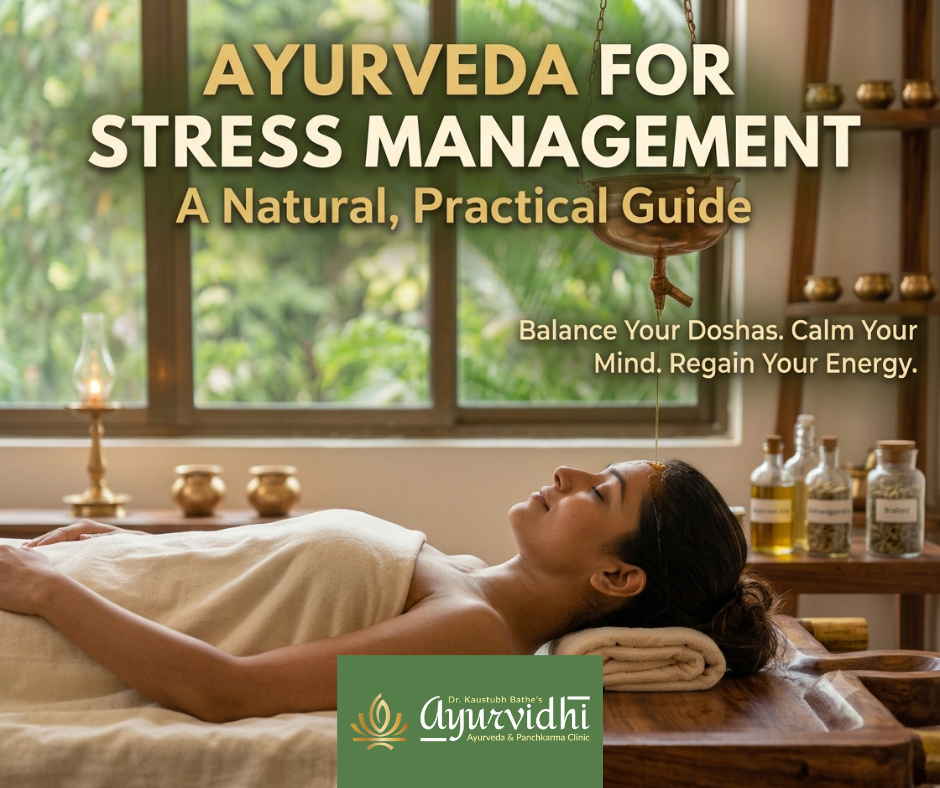
What it is: A continuous, gentle stream of warm herbal oil or liquid poured systematically over the forehead (third eye region).
-
How it helps: Induces a state of deep mental stillness, helps quiet an overactive brain, and supports recovery from prolonged mental fatigue.
Is Panchakarma Necessary for Stress?
Panchakarma is often marketed online as a quick “stress detox,” but it is actually a profound, highly specialized medical procedure. It is not always necessary for general stress. A qualified Ayurvedic physician will evaluate whether your body has the strength and indication for Panchakarma, or if gentle therapies and daily routine corrections are a better starting point.
Daily Checklist: Simple Habits for Inner Calm
-
Waking up at a consistent hour
-
Drinking a glass of warm water in the morning
-
Eating meals mindfully without digital distractions
-
Taking 5-minute movement breaks every 2 hours at work
-
Spending 10–15 minutes outside in natural sunlight
-
Unplugging from electronic devices an hour before bed
When Should You Consult a Doctor?
Occasional stress is a normal part of life, but it shouldn’t rule your everyday existence. You should seek guidance if stress causes:
-
Chronic insomnia or waking up breathless
-
Persistent digestive distress or severe loss of appetite
-
Ongoing feelings of hopelessness, severe panic, or anxiety
-
Total inability to function at work or maintain personal relationships
Ayurvedic treatment can work safely alongside modern medical care to help you regain your vitality faster.
Personalized Care at Ayurvidhi Clinic, Pune
Every individual experiences stress differently. At Ayurvidhi Clinic, Pune, we look beyond surface-level symptoms to find the underlying cause of your fatigue, sleep disruptions, or digestive issues.
A personalized consultation includes evaluating your Prakriti (body constitution), current Dosha imbalances, digestive capacity (Agni), daily routine, and work stress.
Your customized care plan may include:
-
Tailored Ayurvedic dietary guidance
-
Lifestyle and routine adjustments (Dinacharya)
-
Personalized herb recommendations (when clinically needed)
-
Professional therapies such as Abhyanga or Shirodhara
-
Customized Panchakarma protocols (if recommended)
Ready to find your balance?
Visit us at Ayurvidhi Clinic, Lohegaon, Pune for a dedicated assessment and a natural path back to feeling like yourself again.
Frequently Asked Questions
1. Can Ayurveda help with chronic stress?
Yes. Ayurveda supports recovery from chronic stress by addressing root causes—improving sleep quality, balancing digestion, restoring energy levels, and helping you adopt a sustainable daily routine.
2. Is Shirodhara effective for stress and anxiety?
Shirodhara is renowned for its calming effect on the central nervous system. It deeply relaxes the mind and supports sleep, though it works best when combined with healthy daily habits.
3. How long does it take to see results with Ayurvedic stress treatment?
While therapies like Abhyanga and Shirodhara can bring immediate relaxation, long-term relief depends on consistent lifestyle improvements. Most people notice positive shifts in sleep and digestion within a few weeks.
4. Do I need Panchakarma to treat stress?
Not necessarily. Many people experience significant relief through dietary changes, herbal support, routine adjustments, and basic relaxation practices. Panchakarma is only recommended after a formal consultation if deep detoxification is needed.
Final Thoughts: Finding Sustainable Balance
Stress may be a normal part of modern life, but letting it drain your health doesn’t have to be. By tuning in to your body’s signals, nourishing your digestion, and keeping a steady daily rhythm, you can build real, lasting resilience.