

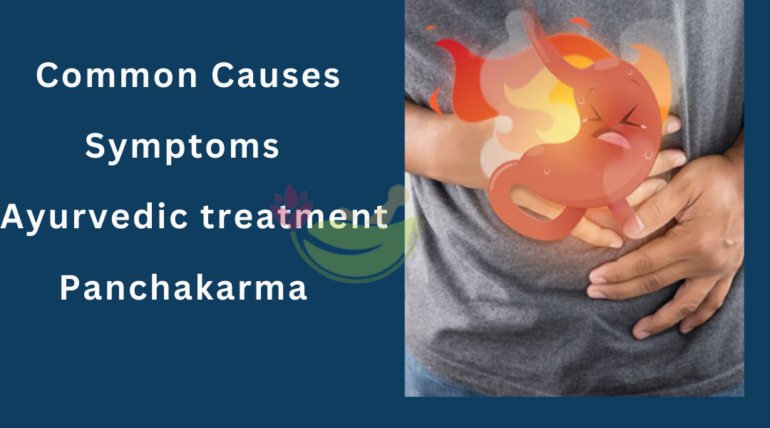
Balancing acidity with ayurvedic secrets & panchakarma techniques
Acidity is a common ailment in today’s world faced by numerous people. Occasionally having a single or once an episode of acid reflux is normal. But recurrent episodes of such acidic episodes are a thing to worry about. Many people are taking antacids for longer duration to get instant relief. But in the longer run it can cause various other side effects. While treating acidity with modern medication focuses only on symptoms whereas Ayurveda has a unique holistic approach to it. In this blog, we will deep dwell on the Ayurvedic approach to acidity.
Understanding the Ayurvedic aspect of acidity:
In Ayurveda, acidity is called Amla-pitta. The word amla-pitta is formed from two words amla means sour and pitta which is one of the doshas. Amla-pitta is the vitiated state of pitta doshas. The normal guna and properties of pitta get changed and cause various symptoms.
Symptoms of Acidity or Aamla-pitta:
- Burning sensation in the stomach
- Chest burning sensation
- Indigestion
- Acid reflux
- Nausea
- Sometimes vomiting
- Headache
- Dizziness
Complications if Aamla-pitta remains untreated:
If Aamla-pitta (acidity) remains untreated for a longer duration can cause several health issues such as:
- Severe gastric issues
- Gastric ulcers
- Osteoporosis
- Joint pain
- Dandruff
- Hair fall
- IBS (Irritable Bowel Syndrome)
- Mouth Ulcers
Causes of acidity (Aamla-pitta) as per Ayurveda:
- Unhealthy food habits
- No proper meal time or irregular eating patterns
- Skipping meal time or eating post-meal timing
- Overconsumption of over-fermented and fried
- Excessive consumption of beverages
- Accumulation of toxins in the stomach or system
- Stress or emotional factors
- Exposure to heat due to environmental, professional, or any other causes
Ayurvedic way of treating acidity (Aamla-pitta):
The ayurvedic treatment of acidity consist of 3 important things such as dietary changes, ayurvedic medication and panchakarma therapy.
Dietary changes:
- Keeping proper meal time: Eating at proper meal time is the best remedy your ayurvedic doctor will suggest to avoid the acidity problem. Acidity occurs due to maleficent or ill Agni, eating on time keeps it in check.
- Avoiding junk: Avoiding junk food and packet foods can help to reduce acidity issues. All fermented food and carbonated food are causative factors of acidity avoiding them is a great step in avoiding it.
- Calories tracking: Over-fried food and heavily oil foods have to be avoided to treat acidity. Eating a good amount of ghee in foods helps to boost metabolism and cure acidity.
- Fruit diet: Eating fruits for breakfast helps to reduce the burning sensation and nausea ultimately treating acidity. Fruits like musk melon, watermelon, pomegranate, Chiku, custard apple, and amla are great choices for avoiding acidity issues. All of them are gut-balancing and keep pitta doshas in check.
- Avoiding triggering foods: Avoiding spicy foods, heavy gravy food, tomato ketchup, excessive coffee or tea, and alcohol is recommended.
While treating acidity with ayurvedic medication it is equally important to follow diet regulations along with the medical treatment.
Ayurvedic Medication for Acidity (Aamla-pitta):
Every person has having different composition of doshas and different causative factors for causing diseases. The same thing is applicable while treating simple but yet tricky acidity. So our readers are requested to consult a doctor before adopting any medication on their own.
- Eating Aamla powder with honey on an empty
- Coriander infused water
- Yashtimadhu with honey
- Avipattikar churna with warm water before bed at night
- Gulkand and Morawala is well recommended to ease the burning sensation and pacify the vitiated pitta doshas
Panchakarma treatment for Acidity (Aamla-pitta):
Vamana & Virechana are highly recommended while treating acidity or amla pitta. Acidity originates due to improper digestion and toxins accumulated in the digestive tract. To expel such toxins from the body Vamana and Virechana procedures seem to be more helpful as well as beneficial.
Consulting with an Ayurvedic doctor:
For personalized guidance and treatment, it is important to consult an Ayurvedic doctor. They can assess your unique constitution of doshas and find out the causative factors for acidity. At Ayurvidhi Clinic we provide one-to-one consultation with a proper case study and history of your symptoms to find the root cause of the disease. So we could provide you with a personalized tailored care ayurvedic treatment for your acidity problem.
Conclusion:
Ayurveda offers a holistic approach to maintaining acidity by addressing imbalances in the body by finding the root cause. This helps to make an accurate diagnosis. Adopting proper dietary changes, incorporating ayurvedic herbal remedies along with making lifestyle adjustments & panchakarma therapy if required will not only help you to overcome acidity but also help to prevent the recurrence.
At Ayurvidhi Clinic Ayurvedic & Panchakarma Clinic, we have successfully treated many patients suffering from acidity and other gastric issues. We at Ayurvidhi Clinic provide the best Ayurvedic panchakarma treatment for acidity and other problems related to it.
Address: Dr. Kaustubh Bathe, Ayurvidhi Clinic Ayurvedic Panchakarma clinic, Office no. 309, 3rd floor, Park Plaza Business Centre, Porwal Road, Lohegaon, Pune – 411047 or visit us at www.ayurvidhiclinic.com or call or WhatsApp at 9511953471.
Follow us on Instagram @ayurvidhi_clinic, and Facebook at Ayurvidhi Clinic.



Recent Comments